


Why Is My Dog Vomiting? Vomiting in dogs can be alarming, but it doesn’t always signal a serious problem. It can result from minor issues like eating too quickly or dietary changes, or indicate underlying health concerns that need attention. Understanding the causes, recognizing warning signs, and knowing how to respond helps you protect your dog and ensure they get the right care at the right time.
Why Is My Dog Throwing Up?
Vomiting happens when a dog’s body tries to push out something it sees as harmful, irritating, or simply hard to digest. It can be triggered by many things, including diet mistakes, infections, or sudden changes in routine. When you pay attention to when it happens, how often it occurs, and what the vomit looks like, you get important clues about your dog’s health.
Not all vomiting is an emergency, but repeated episodes, uncommon colors, or signs of discomfort should never be ignored. Knowing the basics helps you react quickly, prevent complications, and decide whether your dog needs home care or immediate veterinary attention.
Quick Snapshot: Common Reasons Dogs Vomit
These points highlight the everyday triggers that often lead to simple, non-serious vomiting in dogs.
- Eating too fast
- Sudden diet change
- Eating grass or non-food items
- Mild stomach irritation
- Motion sickness
- Sensitive stomach

What Happens Inside the Body During Vomiting
Vomiting starts when the brain’s “vomiting center” receives a signal that something isn’t right—this may come from the stomach, bloodstream, or even motion. The brain then triggers strong abdominal contractions, causing stomach contents to move upward. During this process, dogs may drool, swallow repeatedly, or show tension in their belly before the vomit appears.
Why Understanding the Cause Matters
Knowing the cause helps you avoid guesswork and act correctly. Simple vomiting from eating too fast is handled very differently from vomiting due to toxins or infections. Understanding the cause allows you to protect your dog, take the right steps, and seek professional care at the right time.
Helpful Comparison Table
| Type of Vomiting Issue | Usually Mild? | Needs Vet Attention? | Common Example |
| Diet-related vomiting | Yes | Only if repeated | Eating spoiled food |
| Motion sickness | Yes | Rarely | Car rides |
| Foreign object | No | Yes, immediately | Swallowed toy |
| Infection or parasite | No | Yes | Parvovirus, worms |
| Toxin exposure | No | Emergency | Chemicals, plants |
Vomit vs. Regurgitation
Understanding whether your dog is vomiting or simply regurgitating food is crucial for their health. At first glance, the two may seem almost identical, but they are very different processes. Vomiting is an active response involving the stomach and abdominal muscles, often triggered by illness, toxins, or irritation in the digestive tract.
Regurgitation, on the other hand, is usually passive and occurs when food comes back up from the esophagus shortly after eating, often without warning or effort. Misidentifying these two can lead to delays in proper care, unnecessary worry, or overlooking serious underlying conditions. Observing the timing, effort, and appearance of what your dog expels can help you determine which issue is occurring and whether veterinary attention is needed.
Key Differences You Should Know
This list highlights how vomiting and regurgitation differ and why it matters for your dog’s health:
- Vomiting is active: involves retching, gagging, and abdominal effort.
- Regurgitation is passive: food comes up with little effort, often undigested.
- Timing differs: vomiting can happen hours after eating; regurgitation usually occurs immediately after a meal.
- Color and texture: vomit may contain bile, foam, or blood; regurgitated food looks the same as eaten.
- Underlying causes: vomiting can be due to illness or toxins; regurgitation often relates to swallowing or esophagus issues.
Why Correct Identification Helps Diagnosis
Recognizing whether your dog is vomiting or regurgitating can guide immediate care and prevent serious complications.
Understanding the difference ensures that you respond appropriately. Vomiting may require veterinary intervention if frequent or accompanied by other concerning symptoms. Regurgitation may indicate an esophageal problem that needs attention but is less urgent. Being able to tell the difference saves time, reduces stress for your dog, and helps the vet provide faster, more effective care.

Symptoms of Vomiting in Dogs
Vomiting in dogs can be more than just an upset stomach; it often comes with other visible signs that can help you understand the severity of the issue. Observing your dog carefully before, during, and after a vomiting episode can provide vital clues for proper care. Symptoms can range from mild and occasional to frequent, severe, or combined with other health issues.
Some symptoms may indicate that the problem is temporary, while others could signal a serious condition requiring immediate veterinary attention. Knowing the difference between mild warning signs and critical symptoms helps you act quickly and appropriately, ensuring your dog gets the right care without unnecessary stress.
Common Signs to Watch For
These are the main symptoms that often accompany vomiting in dogs:
- Excessive drooling before vomiting
- Repeated gagging or retching
- Loss of appetite
- Lethargy or unusual tiredness
- Abdominal pain or bloating
- Signs of dehydration (dry gums, sunken eyes)
- Fever or unusual behavior
These signs usually appear before or during a vomiting episode and may help you identify that your dog is not feeling well. Mild vomiting with only a few of these symptoms is often temporary, but noticing these early warning signs can help you manage the situation at home and decide if veterinary care is needed.
Severe Symptoms That Require Urgent Attention
Persistent vomiting, blood in vomit, black or coffee-ground colored vomit, repeated vomiting with diarrhea, or signs of collapse are all red flags. If any of these occur, it’s crucial to contact a veterinarian immediately to prevent complications and protect your dog’s health.
These severe symptoms indicate that the vomiting may be linked to serious health problems, such as infections, organ failure, or ingestion of toxins. Acting quickly in these situations can prevent the condition from worsening and ensures that your dog receives prompt and effective treatment.
Causes of Dog Vomiting
Vomiting in adult dogs can happen for many reasons, ranging from minor digestive upset to serious medical conditions. Some causes are temporary and may resolve on their own, while others require veterinary attention. Paying attention to the frequency, timing, and accompanying symptoms can help you identify whether the cause is mild or potentially dangerous.
Understanding the specific cause of vomiting is important for providing the right care. Identifying dietary triggers, underlying illnesses, or environmental factors allows you to prevent future episodes and ensure your dog recovers safely.

Common Digestive-Related Causes
These are frequent reasons adult dogs vomit and are often less serious:
- Eating spoiled or unusual food
- Sudden diet changes or new treats
- Eating too quickly or overeating
- Motion sickness
- Mild stomach irritation from grass or minor toxins
These causes typically lead to occasional vomiting and may resolve with simple home care, like temporarily withholding food, providing water, or switching to a bland diet. Dogs may show mild discomfort, drooling, or temporary loss of appetite. Recognizing patterns, such as vomiting after certain foods or activities, can help you prevent recurrence and adjust your dog’s routine to avoid future episodes.
Serious Medical Conditions That Trigger Vomiting
Some vomiting episodes in adult dogs can indicate serious health problems that need prompt veterinary care:
- Infections (viral or bacterial)
- Pancreatitis
- Kidney or liver disease
- Gastrointestinal obstructions (foreign objects)
- Toxin ingestion (plants, chemicals, medications)
These conditions often produce repeated vomiting, accompanied by lethargy, diarrhea, or other concerning symptoms. Dogs may appear weak, dehydrated, or in visible discomfort. Early recognition and prompt veterinary treatment are critical to prevent complications such as organ damage, prolonged illness, or worsening of the underlying condition.
Causes of Puppy Vomiting
Puppies have developing digestive and immune systems, which makes them more sensitive than adult dogs. Vomiting in puppies can be caused by diet, infections, or environmental factors, and even a single episode may signal a problem that needs attention. Observing your puppy’s behavior, appetite, and stool can provide important clues about the underlying cause.
Because puppies are still growing, vomiting can lead to dehydration and nutrient loss more quickly than in adult dogs. Identifying the cause early helps prevent serious complications and ensures your puppy grows healthy and strong.

Puppy-Specific Health Risks
These are common causes of vomiting that are unique to puppies:
- Worm infestations or other parasites
- Viral infections such as parvovirus
- Stress from weaning or new environments
- Sensitive stomachs adjusting to solid food
- Eating foreign objects or non-food items
Puppies are particularly vulnerable to these issues, and vomiting may be accompanied by diarrhea, weakness, or poor weight gain. Early detection is critical because puppies can deteriorate faster than adult dogs. Regular veterinary checkups and prompt treatment can prevent serious health problems.
Environmental and Dietary Triggers in Puppies
Certain environmental and dietary factors can trigger vomiting in puppies:
- Sudden introduction of new foods or treats
- Consuming table scraps or human food
- Exposure to toxic plants, chemicals, or medications
- Eating inappropriate toys or objects around the house
Monitoring what your puppy eats and keeping hazardous items out of reach can reduce the risk of vomiting. Puppies are naturally curious and prone to chewing or ingesting unusual items, so prevention is just as important as treatment.
Understanding the Color & Consistency of Dog Vomit
The color and consistency of your dog’s vomit can provide valuable clues about what is happening inside their body. Different shades and textures often indicate different underlying causes, ranging from simple dietary upset to more serious medical conditions. Observing these details carefully helps you understand whether the vomiting is minor or needs urgent attention.
Consistency can also vary from watery to chunky or foamy, and each type may point to different issues. By noting both color and texture, you can give your veterinarian more information, which often speeds up diagnosis and improves the chances of effective treatment.
Different Types of Vomiting in Dogs
Common Types of Vomit Seen in Dogs:
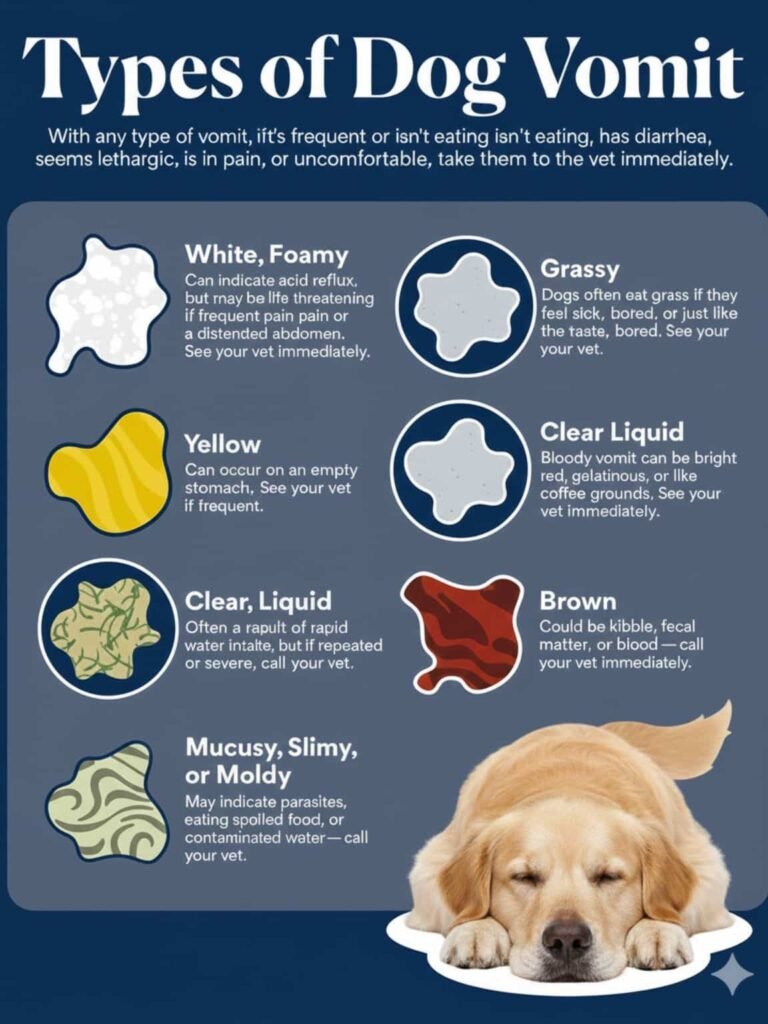
| Type of Vomit | Description | Possible Causes | Recommended Action |
| Yellow Vomit | Occurs on an empty stomach or after repeated vomiting; may result from acid reflux. | Empty stomach, acid reflux (GERD), repeated vomiting | If infrequent and dog is otherwise healthy, veterinary visit usually not needed. Monitor for recurrence. |
| White, Foamy Vomit | Foamy vomit, sometimes without other contents; may indicate discomfort. | Acid reflux, bloat/GDV | Infrequent episodes may be mild. If repeated or with distended abdomen/pain, seek vet immediately. |
| Clear, Liquid Vomit | Expelled clear, slimy fluid, often after rapid water intake. | Overexpansion of stomach from water, minor upset | Single episode usually fine. Repeated/severe vomiting warrants vet attention. |
| Mucusy, Slimy, or Moldy Vomit | Vomit containing mucus, slime, or moldy remnants. | Parasites, spoiled food, contaminated water | Take your dog to the vet for evaluation. |
| Bloody Vomit | Bright red, gelatinous, or coffee-ground appearance. | Bleeding in digestive tract | Seek veterinary care immediately. Collect sample if possible for vet. |
| Brown Vomit | Digested kibble, fecal matter, or digested blood. | Lower digestive tract bleeding, digested food | Take your dog to the vet immediately. |
| Grassy Vomit | Vomiting after eating grass; may be single or repeated episodes. | Boredom, dietary fiber needs, minor stomach upset | Single episode usually fine. If repeated or with foamy/bile-stained vomit, consult vet. |
What Texture and Material Reveal About the Cause
The texture of vomit can also give important information. Foamy or frothy vomit often appears when the stomach is empty or irritated, while chunky vomit typically includes undigested food and may indicate that your dog ate too quickly or has a mild digestive upset. Watery vomit can be a sign of more severe irritation, infection, or toxin ingestion. Noting both texture and content allows you to track patterns and provide accurate information to your vet for diagnosis.
When to Contact Your Veterinarian
Knowing when to seek veterinary care is crucial when your dog is vomiting. While occasional vomiting may be harmless, frequent, severe, or unusual episodes can indicate underlying health problems that need immediate attention. Observing your dog’s overall behavior, appetite, and additional symptoms will help you decide whether it’s time to call the vet.
Prompt veterinary care can prevent complications such as dehydration, malnutrition, or worsening of an underlying illness. Understanding the warning signs and acting quickly ensures that your dog receives the care they need before the problem escalates.

Situations Requiring Immediate Emergency Care
Some signs indicate that vomiting may be part of a serious medical issue requiring urgent attention.
- Repeated vomiting over several hours or days
- Vomit containing blood (fresh red or black, coffee-ground appearance)
- Signs of collapse, weakness, or severe lethargy
- Vomiting accompanied by diarrhea, fever, or severe pain
Seek veterinary care immediately if any of these symptoms appear. Quick intervention can prevent life-threatening complications and improve recovery outcomes.
Signs That Require a Routine Vet Visit
Other signs may not be emergencies but still warrant professional evaluation:
- Occasional vomiting without other symptoms
- Mild loss of appetite
- Vomiting after dietary changes or minor ingestion of unusual foods
Even if your dog seems otherwise healthy, scheduling a routine vet visit can help identify mild issues before they become more serious. This ensures proper diagnosis, guidance on home care, and peace of mind for you as a pet owner.
How Veterinarians Diagnose Vomiting
When a dog is vomiting frequently or shows concerning symptoms, a veterinarian will perform a detailed evaluation to determine the underlying cause. Diagnosis usually begins with a thorough physical examination, reviewing your dog’s history, and asking about recent diet, behavior changes, and exposure to potential toxins. Accurate information from the owner helps guide further testing and ensures a faster, more precise diagnosis.
Understanding the diagnostic process can help pet owners feel prepared and confident. Each test is chosen based on the severity of symptoms, the dog’s age, breed, and medical history. Early and accurate diagnosis allows for effective treatment and prevents complications that may arise from untreated conditions.

Physical Examination and History
The vet will start by checking your dog’s overall condition, including temperature, heart rate, hydration level, and abdominal palpation. They will also ask questions about the vomiting episodes, diet, recent activities, and any known exposure to harmful substances. This initial assessment helps narrow down possible causes and determines which tests are necessary.
Diagnostic Tests Used by Vets
Depending on the initial findings, veterinarians may recommend:
- Blood tests to check organ function and detect infections
- Urinalysis to assess kidney function
- X-rays or ultrasound to look for obstructions, foreign objects, or structural abnormalities
- Stool tests to detect parasites or infections
- Endoscopy in some cases to examine the esophagus and stomach
These tests help identify the root cause of vomiting, guide treatment decisions, and monitor progress during recovery. Providing detailed observations about your dog’s vomiting pattern, color, and frequency can significantly improve the vet’s ability to diagnose and treat the problem efficiently.
Treatment for Dog Vomiting
Treating vomiting in dogs depends on the underlying cause, the severity of symptoms, and the overall health of the dog. Mild cases may resolve with simple home care, while serious conditions require veterinary intervention, medications, or specialized treatment. Knowing the options and proper approach ensures your dog recovers safely and comfortably.
Early intervention can prevent complications such as dehydration, nutrient loss, and worsening of the underlying illness. Treatment often combines supportive care, dietary adjustments, and medical therapy tailored to the cause of vomiting.
At-Home Care Options
For mild or occasional vomiting, you can often manage your dog at home with careful monitoring.
- Give your dog’s stomach a break by withholding food for 12–24 hours.
- Offer water in small, frequent amounts to prevent dehydration.
- Slowly start feeding a bland diet, like boiled chicken and rice.
- Monitor for changes in behavior, appetite, or additional vomiting episodes
These steps are only suitable if the vomiting is mild, your dog remains alert and active, and no alarming symptoms are present. Home care can provide comfort and prevent further irritation while allowing the body to recover naturally.
Vet-Prescribed Treatments and Medications
When vomiting is frequent, severe, or caused by illness, a veterinarian may recommend:
- Anti-nausea medications to reduce vomiting
- IV fluids to treat dehydration and restore electrolytes
- Antibiotics or antiparasitic medications for infections or parasites
- Dietary management or prescription diets for sensitive stomachs or digestive conditions
Following a veterinarian’s guidance ensures that the treatment targets the root cause, prevents recurrence, and supports faster recovery. Accurate diagnosis combined with appropriate therapy is the safest way to manage vomiting in dogs.
Prevention of Vomiting in Dogs
Preventing vomiting in dogs often involves managing diet, environment, and general health. While not all causes can be avoided, adopting preventive measures can reduce the frequency of vomiting and protect your dog from serious health problems. Regular monitoring and proactive care play a key role in maintaining a healthy digestive system.
Good preventive practices also help you identify early warning signs before the condition worsens. By focusing on daily habits, proper nutrition, and regular veterinary checkups, you can minimize risks and ensure your dog stays healthy and comfortable.
Daily Habits to Reduce Risk
Simple daily practices can significantly reduce the chances of vomiting:
- Feed a balanced, high-quality diet appropriate for your dog’s age and breed
- Avoid sudden diet changes and limit table scraps or human food
- Provide fresh water at all times and monitor drinking habits
- Prevent your dog from eating foreign objects or garbage
Paying attention to daily habits is more than just feeding the right food. Dogs that eat too quickly, graze on inappropriate items, or drink excessively after meals are at higher risk of vomiting. Structured feeding times, safe food storage, and careful supervision can prevent accidental ingestion of harmful items and support consistent digestive health.
Long-Term Health Practices
Maintaining overall health also prevents vomiting caused by illness:
- Regular veterinary checkups and vaccinations
- Parasite prevention and deworming
- Maintaining a healthy weight and exercise routine
- Prompt attention to any changes in behavior, appetite, or digestion
Long-term care is essential for reducing recurring vomiting episodes. Preventive veterinary care can detect conditions like kidney or liver issues early, while consistent exercise and weight management support digestion and metabolism. By monitoring your dog’s overall health and acting on small changes, you can prevent many causes of vomiting before they become serious.
Disclaimer:
The information provided in this article is for educational purposes only and is not a substitute for professional veterinary advice. If your dog is vomiting frequently, shows signs of distress, or displays unusual symptoms, seek immediate veterinary care. Always consult a licensed veterinarian for diagnosis, treatment, and guidance specific to your pet’s health.
