

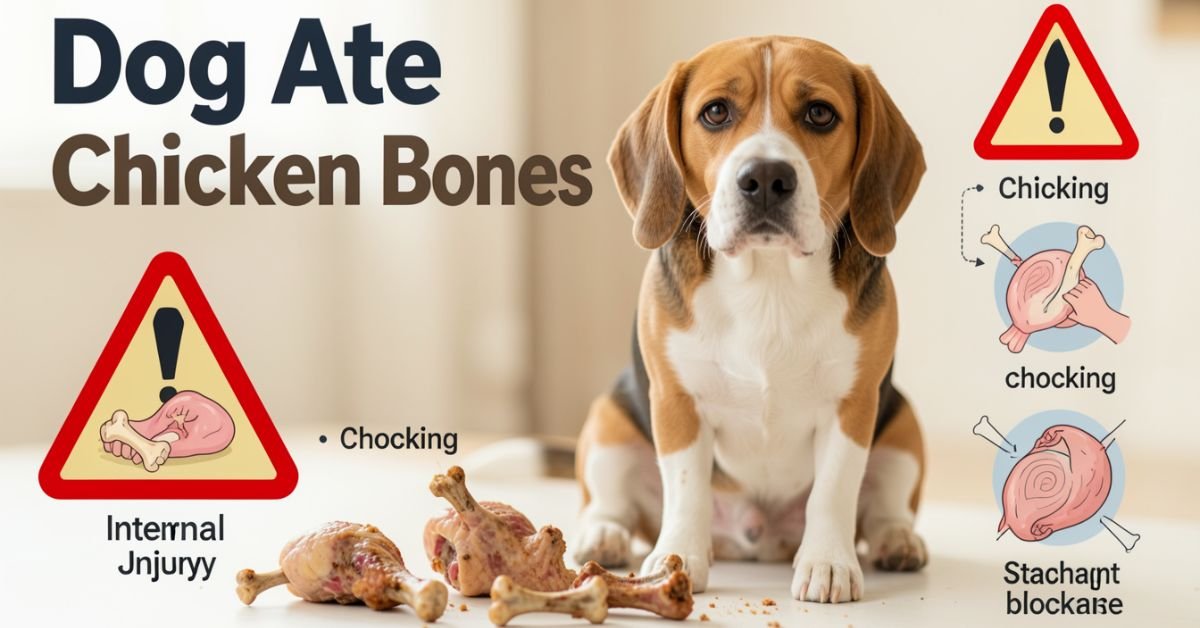
If your Dog ate chicken bones, you need to act quickly and make informed decisions. Chicken bones—especially cooked ones—can splinter into sharp fragments that puncture internal organs, block the digestive tract, or lead to severe infections. While some dogs pass bones without issues, others develop life-threatening complications within hours.
This guide explains exactly,Dog Ate Chicken Bones. what to do, what symptoms to watch for, and how veterinarians manage these emergencies.
Updated May 2026: Emergency vet protocol updated — new 10-minute action checklist added for faster response.
The Immediate Risk: Why Are Chicken Bones Dangerous for Dogs?

Chicken bones pose a serious risk due to their structure and behavior under pressure.
Raw vs Cooked Chicken Bones
| Type of Bone | Structure | Risk Level | Why It Matters |
| Raw Chicken Bones | Flexible, collagen-rich | Moderate | Less likely to splinter but may still cause blockage |
| Cooked Chicken Bones | Dry, brittle | High | Splinter into sharp fragments that can puncture organs |
Cooking removes moisture and weakens the bone’s internal matrix. As a result, cooked bones break easily into jagged shards. These fragments can lodge in the throat, tear the esophagus, or puncture the intestines.
Signs Your Dog Is in Trouble: Symptoms to Watch For
You must monitor your dog closely for 48–72 hours after ingestion. Symptoms may not appear immediately, but they can escalate quickly.
Red Alert Symptoms
- Choking or gagging
- Excessive drooling
- Vomiting or repeated retching
- Lethargy or weakness
- Abdominal pain (restlessness or hunched posture)
- Bloody or black stools
- Constipation or straining
These signs often indicate blockage, internal injury, or bleeding. You should contact a veterinarian immediately if any of these symptoms appear.
The “Bread Method” and Other Expert-Approved Home Triage
You can attempt home management only if your dog shows no symptoms and has swallowed a small amount of bone.
The Bread Method
You can feed your dog soft bread to help cushion bone fragments.
How it works:
- Bread forms a soft, dense mass in the stomach
- It surrounds sharp edges
- It reduces the chance of internal injury during digestion
Cotton Ball Method (Vet-Guided Only)
Some veterinarians use food-soaked cotton balls to trap fragments and help them pass safely.
Important limitations:
- Do not use these methods if your dog shows symptoms
- Do not rely on home remedies for large bones
- Do not delay veterinary care if conditions worsen
What NOT to Do
- Do NOT induce vomiting
- Do NOT give hard or sharp foods
- Do NOT ignore symptoms
Inducing vomiting can force sharp fragments back through the esophagus and increase injury risk.
Case Study: Recovery Timeline After Bone Ingestion
Outcomes vary depending on dog size, bone type, and timing of care.
| Dog Size | Bone Type | Outcome | Timeline |
| Small (5–10 kg) | Cooked wing bone | Mild blockage, required vet care | 3–5 days |
| Medium (10–25 kg) | Cooked thigh bone | Passed naturally with monitoring | 48–72 hours |
| Large (25+ kg) | Raw bone | No complications | 24–48 hours |
Smaller dogs face higher risks because bone fragments can obstruct narrower digestive pathways.
How Veterinarians Diagnose and Treat Bone Blockages
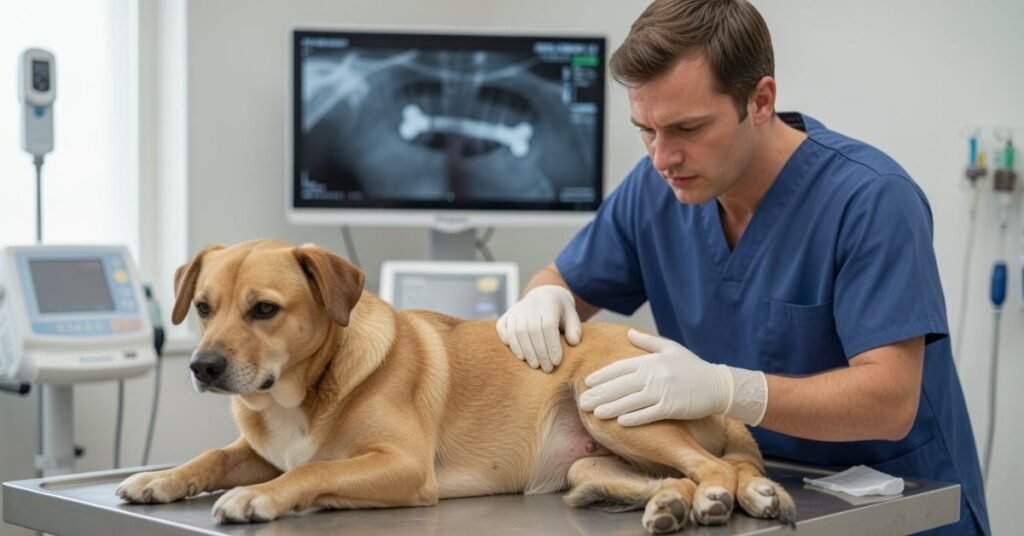
Veterinarians use a structured approach to assess internal damage and determine treatment.
Diagnostic Methods
- Physical examination: Detects pain, swelling, and dehydration
- Abdominal X-ray: Identifies bone fragments and blockages
- Contrast imaging (Barium): Tracks movement through the digestive system
Treatment Options
| Treatment | When Used | Description |
| Monitoring | Mild cases | Vet observes symptoms and stool passage |
| Endoscopy | Upper GI blockage | Removes bone using a flexible camera tool |
| Surgery | Severe cases | Required for perforation or full obstruction |
Early diagnosis improves outcomes and reduces the risk of complications such as infection or intestinal rupture.
The “Splinter Simulation” Study
Testing under simulated chewing pressure shows how dangerous cooked chicken bones can become.
- Wing bones splinter into thin, sharp fragments
- Thigh bones crack into jagged pieces
- Fragments can puncture soft tissue easily
These findings explain why cooked bones frequently cause internal injuries in Dog Ate Chicken Bones.
The “Gastric Acid” Breakdown Myth
Many dog owners assume stomach acid will dissolve bones quickly. This belief can delay critical care.
- Bone digestion takes several days
- Cooked bones resist breakdown more than raw bones
- Sharp fragments can cause damage before dissolving
You should never rely on stomach acid to neutralize the risk.
Vetting the Follow-Up: 48–72 Hour Monitoring Checklist
You must monitor your dog carefully after ingestion.
What to Track
- Appetite and hydration
- Energy levels
- Signs of discomfort
Stool Monitoring Protocol
- Check every bowel movement
- Look for bone fragments
- Watch for blood or unusual color
- Monitor for straining or constipation
If you notice anything unusual, contact your veterinarian immediately.
Preventative Measures: Dog-Proofing Your Kitchen
You can prevent most incidents with simple precautions.
Practical Tips
- Dispose of bones in sealed trash bins
- Keep food scraps out of reach
- Avoid feeding table scraps
- Train your dog to ignore dropped food
Consistent prevention reduces the risk of emergencies.
FAQs
Can dogs eat chicken bones safely?
No. Cooked chicken bones are especially dangerous because they splinter and can cause internal injuries.
My dog ate a chicken bone, but seems fine—what should I do?
Monitor your dog closely for 48–72 hours. Symptoms may appear later.
How long does it take for a dog to pass a chicken bone?
Most dogs pass small fragments within 1–3 days, but complications can occur.
Should I induce vomiting after bone ingestion?
No. Inducing vomiting can cause sharp fragments to damage the throat or esophagus.
What is the biggest risk from chicken bones?
The biggest risks include intestinal blockage, perforation, and internal bleeding.
Conclusion
If your dog eats chicken bones, you must act quickly and make informed decisions. Cooked bones pose the highest risk due to their tendency to splinter, while even symptom-free dogs require careful monitoring.
You should avoid inducing vomiting, use home methods cautiously, and seek veterinary care if symptoms appear. With prompt action and proper follow-up, you can significantly reduce the risk of serious complications and protect your dog’s health.
