
The Clinical Verdict: Can Dogs Eat Pumpkin Safely?
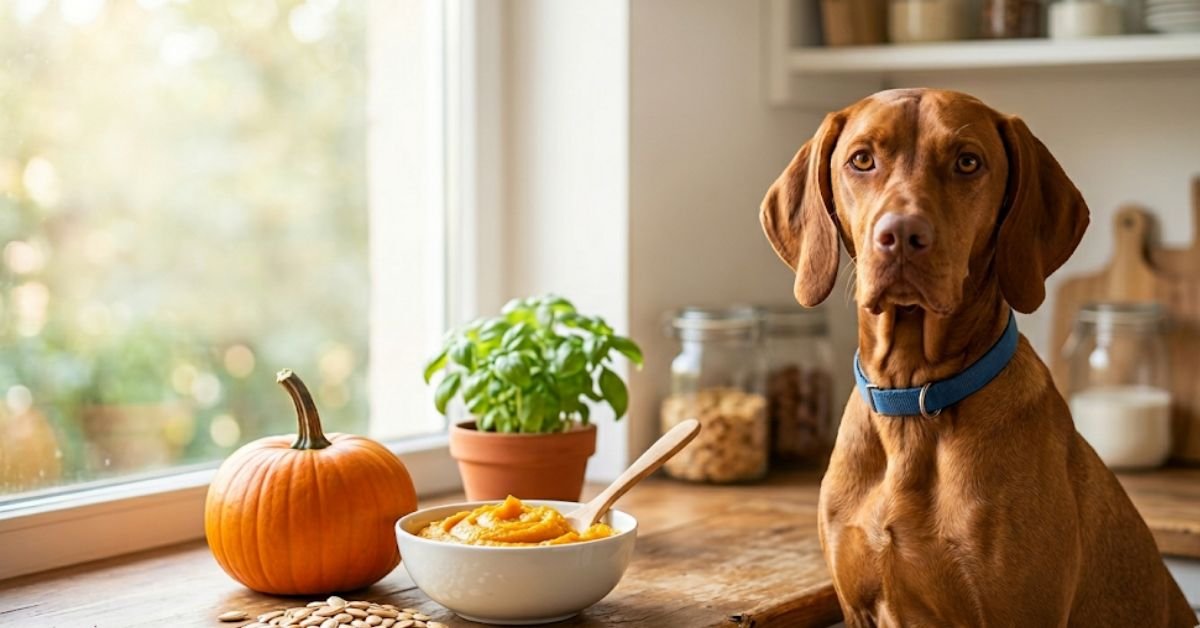
Yes, dogs can eat pumpkin safely, and veterinarians frequently recommend it as a functional food for digestive regulation. Pumpkin, scientifically classified as Cucurbita pepo, provides a dense nutritional profile that supports gut health, immune response, and metabolic stability in canines.
Unlike many commercial fillers found in dog food, pumpkin delivers high moisture content, bioavailable fiber, and essential micronutrients that actively improve digestive performance. Its soft texture and high digestibility make it particularly effective for dogs recovering from gastrointestinal disturbances such as diarrhea, constipation, or mild GI stasis.
The Nutritional Breakdown
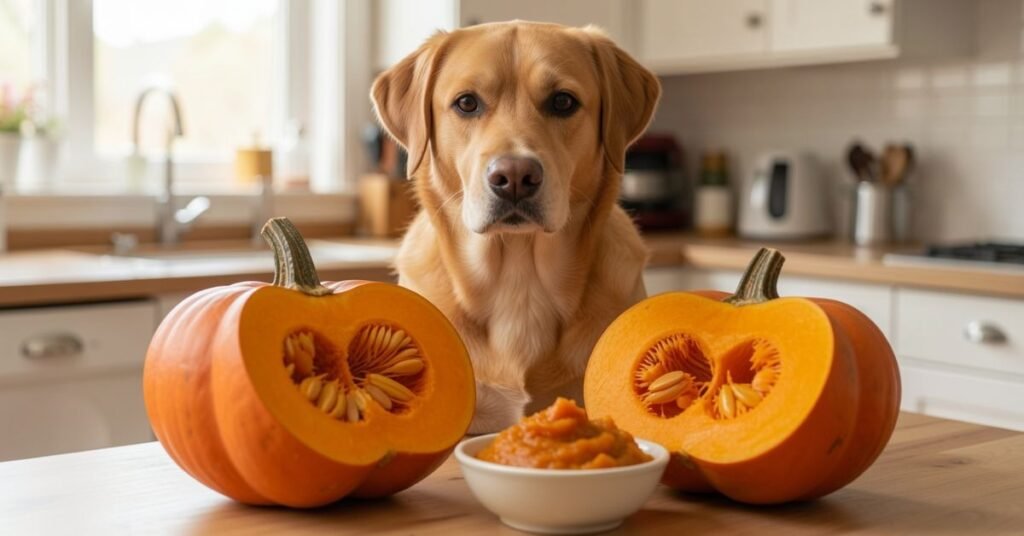
Pumpkin differs significantly from traditional kibble fillers in both composition and physiological impact.
| Nutrient Component | Pumpkin (Puree) | Typical Kibble Filler |
| Moisture Content | ~90% | ~10% |
| Soluble Fiber | High | Low |
| Beta-Carotene | High | Minimal |
| Glycemic Index | Low | Moderate–High |
| Digestibility | Excellent | Variable |
This composition allows pumpkin to act as a hydrating fiber source, rather than a dry bulking agent. Dogs absorb nutrients more efficiently, and the digestive tract processes food with less strain.
The “Why” Factor: Nutrient Impact on Dogs
Pumpkin supports canine physiology through several mechanisms:
- Beta-carotene (Vitamin A precursor): The body converts it into vitamin A, which enhances vision, immune defense, and epithelial health.
- Potassium: This mineral regulates muscle contraction, supports cardiac function, and maintains proper nerve signaling.
- Soluble fiber: It acts as a prebiotic, feeding beneficial gut bacteria and improving microbiome balance.
- Low glycemic index: Pumpkin prevents rapid spikes in blood glucose, making it suitable even for dogs with metabolic sensitivities.
However, moderation remains critical. Excessive intake can lead to vitamin A toxicity in canines, particularly if owners combine pumpkin with other fortified foods.
Vet-Tested Ratios: How Much Can Dogs Eat Pumpkin Per Day?
Determining the correct serving size requires more than a generic recommendation. Veterinarians use adaptive feeding strategies that respond to the dog’s digestive condition.
The Stool-Scale Titration Method
This method allows pet owners to adjust pumpkin intake based on real-time digestive feedback:
| Stool Condition | Recommended Adjustment |
| Hard / Dry | Increase the pumpkin slightly |
| Normal / Firm | Maintain the current amount |
| Soft / Loose | Increase gradually |
| Watery / Severe | Combine with veterinary care |
This approach ensures precision. Instead of overfeeding or underfeeding, you calibrate intake according to measurable outcomes.
Daily Serving Guidelines by Size
You can use body weight as a baseline for portioning:
| Dog Size | Weight Range | Daily Pumpkin (Tbsp) |
| Toy | 2–10 lbs | 1–2 tsp |
| Small | 10–25 lbs | 1–2 tbsp |
| Medium | 25–50 lbs | 2–3 tbsp |
| Large | 50–90 lbs | 3–4 tbsp |
| Giant | 90+ lbs | 4–6 tbsp |
Optimal Fiber-to-Protein Ratio
When adding pumpkin as a topper, you must preserve dietary balance:
| Breed Size | Ideal Fiber: Protein Ratio |
| Toy | 5% : 95% |
| Medium | 10% : 90% |
| Giant | 12–15%: 85–88% |
Maintaining this ratio prevents nutrient dilution while still delivering the digestive benefits of pumpkin.
Canned vs. Fresh: Which Type Can Dogs Eat Pumpkin From?
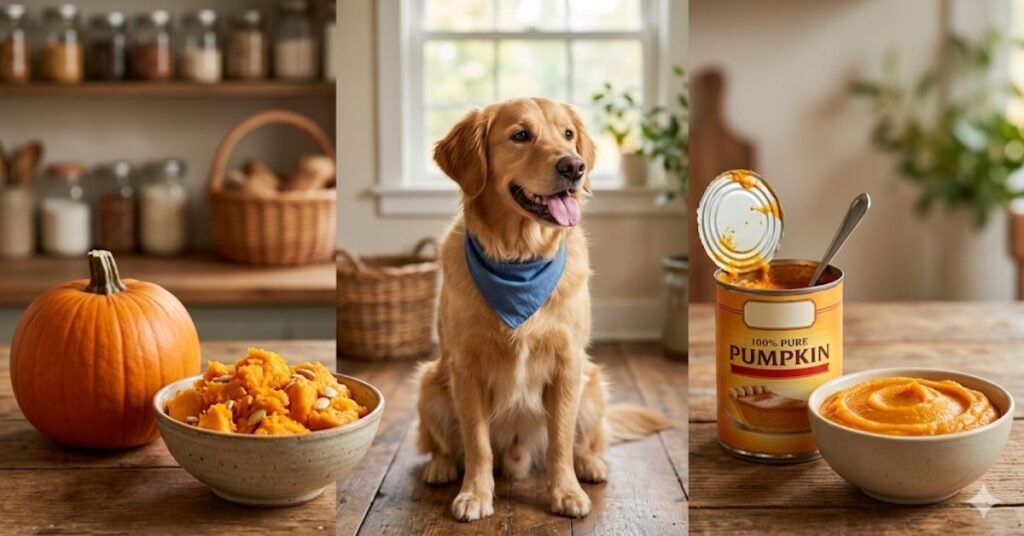
Both canned and fresh pumpkin can support canine health, but their effectiveness depends on preparation and ingredient purity.
Blood Glucose Response Comparison
| Type of Pumpkin | Glycemic Response | Digestibility | Practical Use |
| Fresh Roasted | Lowest | Excellent | Best overall |
| Canned Puree | Low | Very good | Most convenient |
| Pumpkin Pie Filling | High (unsafe) | Poor | Avoid completely |
Fresh pumpkin retains slightly more natural enzymes and nutrients, while canned puree offers convenience and consistency. Both remain safe when they contain no additives.
The Danger Zone: What to Avoid
Many pumpkin products marketed for human consumption contain harmful ingredients for dogs. You must avoid:
- Pumpkin pie filling: Often includes sugar, artificial flavoring, and preservatives
- Nutmeg: Toxic to dogs and can cause neurological symptoms
- Xylitol: A highly dangerous sweetener that can trigger rapid insulin release and liver failure
Always choose plain, 100% pumpkin puree with no added ingredients.
Digestive Health: Why Can Dogs Eat Pumpkin for Diarrhea and Constipation?
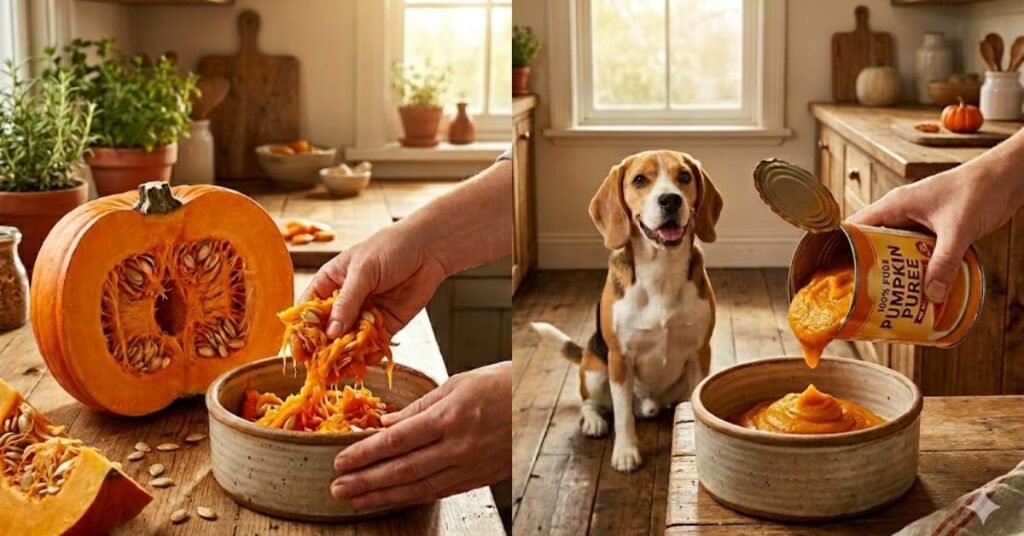
Pumpkin exhibits a rare property in nutrition: it can treat both diarrhea and constipation effectively. This dual function arises from its unique fiber composition.
The Fiber Paradox Explained
Pumpkin contains soluble fiber that adapts to the digestive environment:
- In cases of diarrhea, it absorbs excess water in the intestines, resulting in firmer stool.
- In cases of constipation, it retains moisture and increases stool bulk, facilitating easier passage.
This adaptive mechanism allows the pumpkin to normalize digestive function rather than simply stimulating or suppressing it.
Clinical Observation: Recovery Outcomes
Veterinary observations highlight the effectiveness of pumpkin in recovery diets:
| Diet Type | Average Recovery Time |
| Bland Rice Diet | 3–4 days |
| Rice + Pumpkin Addition | 1.5–2.5 days |
Dogs that consume pumpkin alongside a bland diet recover faster because pumpkin enhances gut motility, stabilizes intestinal flora, and supports digestive enzyme activity.
Additionally, pumpkin’s prebiotic properties help restore microbial balance after disturbances caused by dietary changes, infections, or mild gastrointestinal inflammation.
Seeds, Skins, and Stems: What Parts Can Dogs Eat Pumpkin From?
Not every part of the pumpkin offers equal safety or nutritional value. Proper selection and preparation are essential.
Safe vs Unsafe Parts
| Pumpkin Part | Safe for Dogs? | Notes |
| Flesh (puree) | Yes | Primary and safest option |
| Seeds (pepitas) | Yes (prepared) | Must be cleaned and ground |
| Skin / Rind | Limited | Difficult to digest, risk of blockage |
| Stem | No | Choking hazard |
The Pepita Protocol
Pumpkin seeds, also known as pepitas, contain compounds associated with parasite resistance. While not a replacement for veterinary treatment, they can serve as a supplementary measure.
Follow this preparation method:
- Remove seeds and clean thoroughly
- Roast without salt or seasoning
- Grind into a fine powder
- Add small, controlled amounts to meals
Grinding improves digestibility and reduces the risk of gastrointestinal irritation.
Practical Feeding Workflow
To simplify implementation, follow this structured approach:
- Start with a small amount based on your dog’s weight
- Observe stool consistency over 24–48 hours
- Adjust using the stool-scale method
- Maintain balance with protein intake
- Avoid processed or flavored pumpkin products
This workflow ensures consistent results while minimizing risk.
FAQs
Can dogs eat pumpkin every day?
Yes, dogs can eat pumpkin daily when you control portions properly. Regular intake can support digestive stability and gut health.
Can dogs eat pumpkin seeds safely?
Yes, but you must prepare them correctly. Always grind seeds to improve digestion and prevent irritation.
Is canned pumpkin better than fresh?
Both options work well. Fresh pumpkin offers slightly higher nutrient retention, while canned puree provides convenience and consistency.
Can pumpkin help with dog diarrhea immediately?
Pumpkin often improves symptoms within 24 to 48 hours. For severe cases, combine dietary adjustments with veterinary guidance.
Can too much pumpkin harm dogs?
Yes. Excessive consumption may lead to vitamin A toxicity or digestive imbalance. Always follow measured portions.
Conclusion
Pumpkin serves as one of the most reliable and veterinarian-endorsed natural supplements for canine digestive health. Its combination of soluble fiber, hydration, and micronutrients allows it to regulate stool consistency, improve gut function, and accelerate recovery from common gastrointestinal issues.
When you apply structured feeding strategies such as the stool-scale titration method, select safe forms like pure pumpkin puree, and avoid harmful additives, you convert a simple ingredient into a clinically effective dietary tool.
Use pumpkin with precision and consistency, and you will support not only your dog’s digestive system but also its overall health and vitality.
