
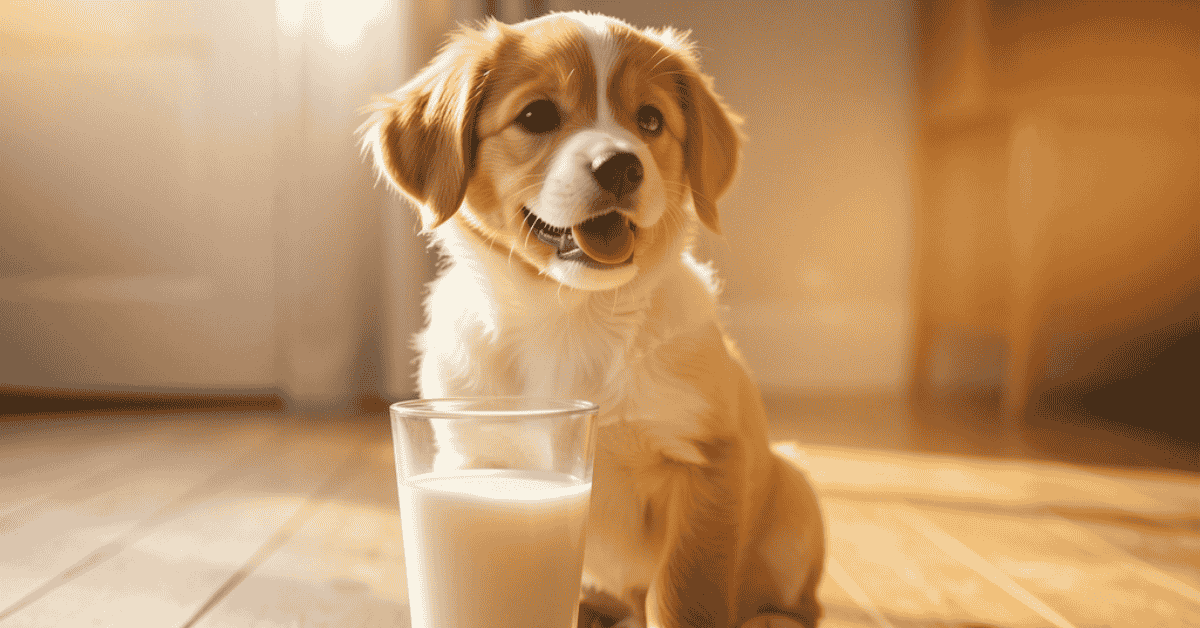
Can dogs drink milk? If your dog just lapped up a bowl of milk or you are wondering whether to offer it as a treat, you are asking exactly the right question. The short answer is that most dogs should not drink milk regularly. While milk is not toxic to dogs the way chocolate is, the majority of adult dogs are lactose intolerant and cannot digest it properly. In this complete 2026 vet-approved guide, we explain everything you need to know about dogs and milk, including safe alternatives, what to do in an emergency, and which breeds are most at risk.
Quick Answer: Can Dogs Drink Milk?
Technically, yes, dogs can drink milk, but they should not. Most adult dogs lack enough lactase enzyme to digest lactose, the natural sugar found in milk. This leads to digestive upset, including diarrhea, gas, bloating, and vomiting. Even small amounts can cause discomfort in sensitive dogs.
Is Milk Good for Dogs? The Nutritional Truth
Milk provides no nutritional benefits that dogs cannot already get from a balanced, high-quality dog food. While human children benefit from milk’s calcium and vitamins, adult dogs receive complete nutrition from their regular diet.
Here is why milk falls short as a treat for dogs.
Empty calories: A cup of whole milk contains around 150 calories. For a 20-pound dog, that is nearly one-third of their daily calorie needs with very little nutritional value, which can lead to obesity and diabetes over time.
Pancreatitis risk: The high-fat content in milk can trigger life-threatening inflammation of the pancreas. Breeds like French Bulldogs, Miniature Schnauzers, and Cocker Spaniels are particularly at risk.
No essential nutrients: Dogs synthesize their own Vitamin C, and their calcium needs are already met through formulated dog food. Milk simply adds unnecessary strain on the digestive system without providing anything extra.

Are Dogs Lactose Intolerant? The Biological Breakdown
Yes, most adult dogs are lactose intolerant. Puppies produce abundant lactase enzyme to digest their mother’s milk, but after weaning around 8 weeks of age, lactase production drops significantly. By adulthood, most dogs are functionally lactose intolerant.
When a lactose intolerant dog consumes milk, the undigested lactose ferments in the colon. This draws water into the intestines and produces gas. The result is a range of uncomfortable symptoms.
Common symptoms of lactose intolerance in dogs include diarrhea and loose stools, excessive gas and abdominal bloating, stomach gurgling, vomiting, and restlessness.
Symptoms typically appear within 30 minutes to 2 hours of consuming milk.
Breed-Specific Sensitivities
Brachycephalic breeds like Pugs and Bulldogs and small breeds like Chihuahuas and Maltese often have naturally sensitive stomachs. Breeds prone to pancreatitis such as Dachshunds and Cocker Spaniels face higher risks from the fat content in dairy products.
What Happens if a Dog Drinks Too Much Milk? Immediate Steps
If your dog accidentally drank a large amount of milk, do not panic. Milk is not a poison like chocolate. However, you should act quickly to minimize discomfort.
The Critical 2-Hour Observation Rule
Minutes 0 to 15: Remove any remaining dairy and estimate how much the dog consumed. Provide fresh water but do not induce vomiting, as milk can cause aspiration if inhaled.
Minutes 15 to 60: Watch for pacing, drooling, or stomach gurgling. Check the abdomen. It should feel soft, not hard or distended.
Minutes 60 to 120: Document all symptoms. Evaluate whether they are mild such as minor gas or severe such as repeated vomiting or bloody stool.
When to Contact Your Vet Immediately
Seek professional help if consumption exceeds 1 cup per 20 pounds of body weight, if severe vomiting with 3 or more episodes or bloody diarrhea occurs, if signs of dehydration appear such as sunken eyes or dry gums, or if large breeds show bloat symptoms such as unproductive retching and a hard abdomen.
Home Care for Mild Symptoms
Withhold food for 6 to 12 hours to let the digestive system rest. Reintroduce a bland diet of plain boiled chicken and white rice in small portions. Ensure fresh water is always available to prevent dehydration.

What Happens if a Dog Drinks Too Much Milk? (Immediate Steps)
If your dog lapped up a bowl of milk, don’t panic—it isn’t a poison like chocolate. However, you must act to minimize discomfort.
The Critical 2-Hour Observation Rule
- Minutes 0-15: Remove remaining dairy and estimate consumption. Provide fresh water but do not induce vomiting, as milk can cause aspiration if inhaled.
- Minutes 15-60: Watch for pacing, drooling, or stomach gurgling. Check the abdomen; it should feel soft, not hard or distended.
- Minutes 60-120: Document all symptoms. Evaluate if they are mild (minor gas) or severe (repeated vomiting).
When to Contact Your Veterinarian Immediately
Seek professional help if:
- Consumption exceeds 1 cup per 20 lbs of body weight.
- Severe vomiting (3+ episodes) or bloody diarrhea occurs.
- Signs of dehydration: Sunken eyes or dry gums.
- Large breeds show “Bloat” symptoms: Unproductive retching and a hard abdomen.
Home Care for Mild Symptoms
Withhold food for 6–12 hours to let the system rest. Reintroduce a bland diet of plain boiled chicken and white rice in small portions. Ensure water is always available to prevent dehydration.

Can Puppies Drink Cow’s Milk? (A Dangerous Misconception)
Puppies should never drink cow’s milk as a mother’s milk substitute. Canine milk is higher in fat and protein but lower in lactose than cow’s milk.
Feeding cow’s milk to puppies causes:
- Severe dehydration from diarrhea.
- Nutritional deficiencies and stunted growth.
- Weakened immune systems (cow’s milk lacks maternal antibodies).
For orphaned puppies, use only veterinary-approved replacers like Esbilac or Royal Canin Baby Dog Milk.

Can Dogs Drink Milk Alternatives like Almond or Oat Milk?
The safety of plant-based milks depends entirely on the ingredients.
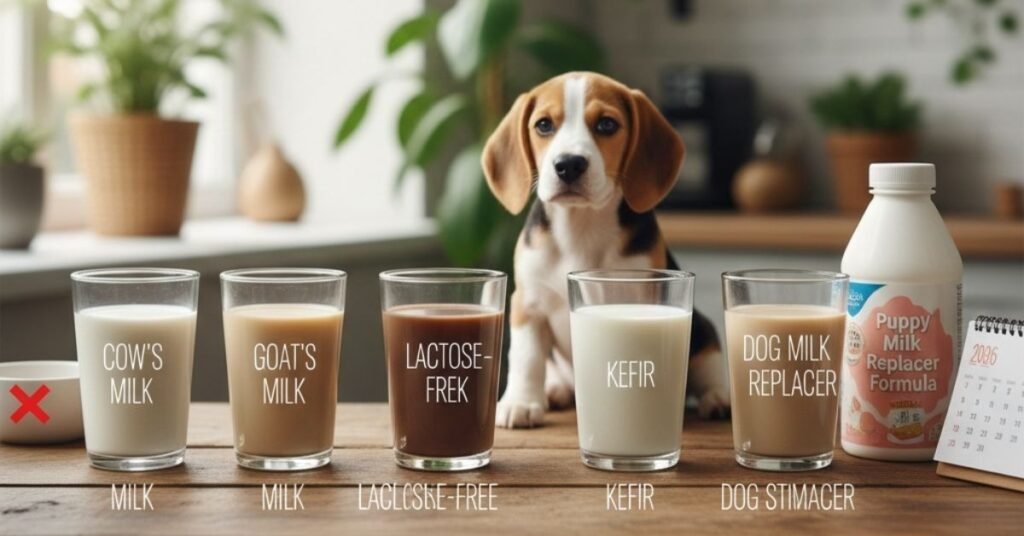
Milk Alternatives Comparison Table
| Milk Type | Lactose | Safety Level | Key Concerns | Verdict |
| Cow’s Milk | High | ❌ Not Recommended | Digestive upset, Pancreatitis | Avoid |
| Goat’s Milk | Moderate | ⚠️ Occasional Only | Still contains lactose | Small amounts |
| Almond Milk | None | ⚠️ Check Label | Xylitol risk, almond allergies | Unsweetened only |
| Oat Milk | None | ⚠️ Better Option | High carbs/calories | Best plant choice |
| Soy Milk | None | ❌ Not Recommended | Soy allergies, gas | Avoid |
| Coconut Milk | None | ❌ Dangerous | High fat, pancreatitis risk | Avoid |
Critical Almond Milk Warning
Many almond milks contain Xylitol, an artificial sweetener that causes life-threatening liver failure in dogs. Always check the label.
The Medication Interference Problem
Calcium in dairy binds to certain drugs, making them ineffective. Never hide these pills in milk or cheese without vet approval:
- Antibiotics: Tetracyclines and Fluoroquinolones.
- Thyroid Meds: Levothyroxine.
- Iron Supplements.
Safer alternatives for hiding pills include Xylitol-free peanut butter or wet dog food.
FAQs
Q1: Kya dogs lactose-free milk pi sakte hain?
Haan, lactose-free milk dogs ke liye regular milk se zyada safe hai kyunki isme lactose sugar pehle se break hoti hai. Phir bhi, isme fat aur calories zyada hoti hain, isliye ise rozana ke bajaye sirf kabhi-kabhi ek treat ke taur par hi den.
Q2: Agar dog ghalti se zyada doodh pi le toh kya karna chahiye?
Agle 24 ghanton tak apne dog par nazar rakhen. Agar usse gas, diarrhea ya vomiting ho, toh 6-12 ghante khana na den aur sirf fresh paani faraham karen. Agar symptoms barhte jayen ya dog sust ho jaye, toh furan apne vet se rabta karen.
Q3: Kya dahi (yogurt) doodh se behtar option hai?
Ji haan, plain aur un-sweetened dahi doodh ke muqable behtar hai kyunki fermentation iske lactose ko kam kar deti hai. Isme maujood probiotics dog ke hazme (digestion) ke liye faydemand hain, bashart-e-ke dahi mein koi artificial sweetener ya cheeni na ho.
Q4: Kya puppies ko gaaye ka doodh (cow milk) dena chahiye?
Hargiz nahi. Cow milk mein puppies ke liye zaroori proteins aur fats kam hote hain aur lactose zyada hota hai, jo unke nazuk pait ko kharab kar sakta hai. Maa ke doodh ke mutabadil ke taur par hamesha vet-approved “Puppy Milk Replacer” hi use karen.
Q5: Kya main dog ko medicine dene ke liye doodh use kar sakta hoon?
Nahi, ye sahi nahi hai. Doodh mein maujood calcium kuch medicines (khususan antibiotics) ke asar ko kam ya khatam kar sakta hai. Dawai dene ke liye plain peanut butter, geela dog food, ya “pill pockets” ka istemal karna zyada safe aur asar-dar hai.
The Bottom Line: Better Alternatives to Milk
Your dog doesn’t need milk; they need water and balanced nutrition. If you want to offer a liquid treat, choose:
- Low-sodium bone broth: Great for joints.
- Plain, unsweetened yogurt: Provides probiotics.
- Fresh, clean water: The only beverage a dog truly needs.
- Healthy Fruits: Milk ke bajaye aap apne dog ko natural treats de sakte hain. Agar aap phal (fruits) ke baare mein janana chahte hain, toh padhen hamari detailed guide: [Can Dogs Eat Bananas]?
The simplest answer is: dogs physically can drink milk, but they shouldn’t. Choose health over habit.
