

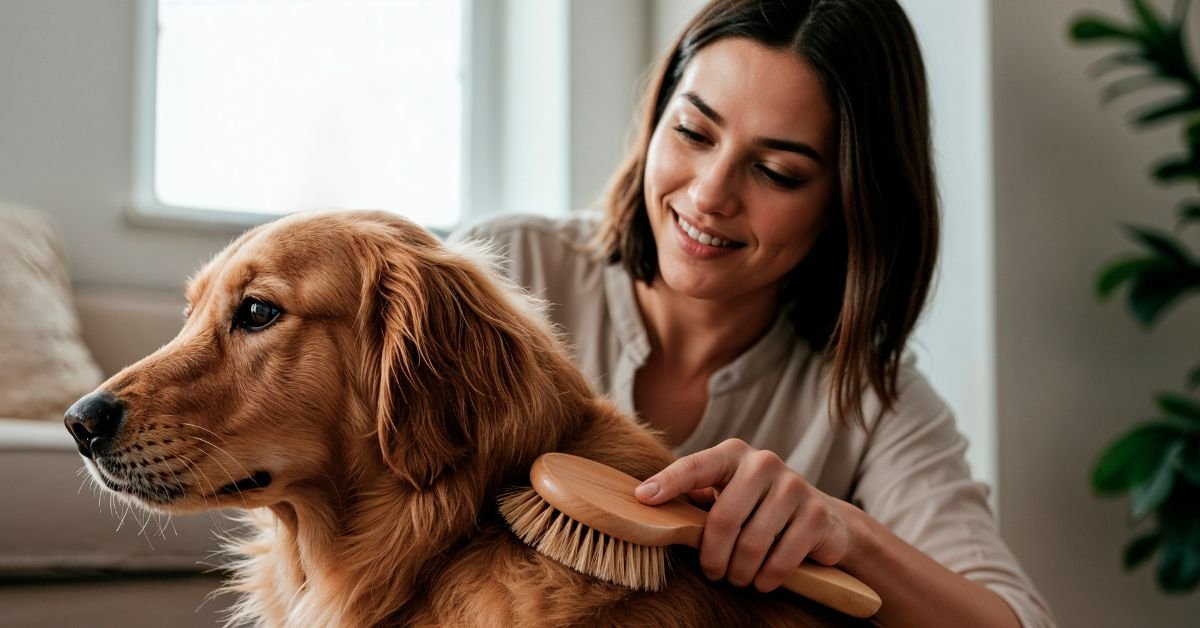
Can Dogs Get Lice? Everything Panicked Pet Parents Need to Know
Yes, dogs can get lice—but before you panic, here’s the crucial news: dog lice are species-specific parasites that cannot infest humans or other pets. Your child is not at risk. The two types of lice that affect dogs, Trichodectes canis (chewing lice) and Linognathus setosus (sucking lice), only survive on canine hosts and will die within 24-48 hours without a dog to feed on.
I know what brought you here. You were brushing your dog’s coat and noticed something moving. Or maybe your usually energetic pup has been scratching relentlessly, keeping everyone awake at night. You grabbed your phone, typed “can dogs get lice” with trembling fingers, and now you’re terrified your whole house is contaminated.
Take a breath. You found this guide, which means you’re already ahead of the problem. By the time you finish reading, you’ll know exactly what you’re dealing with, how to treat it, and most importantly—how to protect your family and prevent it from happening again.
Unlike the nightmare scenarios you’ve read about human lice infestations at schools, dog lice are actually easier to eliminate. They don’t jump or fly. They spread slowly, through direct contact. And with the right protocol (which I’ll walk you through step-by-step), you can have your dog lice-free within two weeks.
Yes, Dogs Can Get Lice—Here’s What You Need to Know
Let’s address the elephant in the room: canine lice infestations are relatively uncommon compared to fleas or ticks, but they do happen, especially in dogs from shelters, breeding facilities, or households with multiple pets living in close quarters.
Here’s what makes dog lice different from what you might expect:
Dog lice are obligate parasites. This scientific term means they are biologically programmed to survive only on dogs. The species Trichodectes canis (chewing lice) and Linognathus setosus (sucking lice) have evolved over thousands of years to live exclusively in canine fur. Their mouthparts are designed specifically for dog skin and blood. They cannot adapt to human skin temperature, pH levels, or hair structure.
The entire lifecycle happens on your dog. Unlike fleas, which lay eggs in carpets and furniture, lice complete their full 3-4 week lifecycle—from egg (nit) to nymph to adult—directly on the host animal. Female lice cement their eggs to individual hair shafts near the skin, where warmth helps them develop. This is actually good news for treatment, as we’ll discuss later.
Transmission requires direct contact. Dogs get lice through prolonged physical contact with an infested dog or by sharing contaminated grooming tools, bedding, or collars. You won’t find lice jumping from dog to dog across your backyard like fleas. This makes prevention more straightforward once you understand the risk factors.
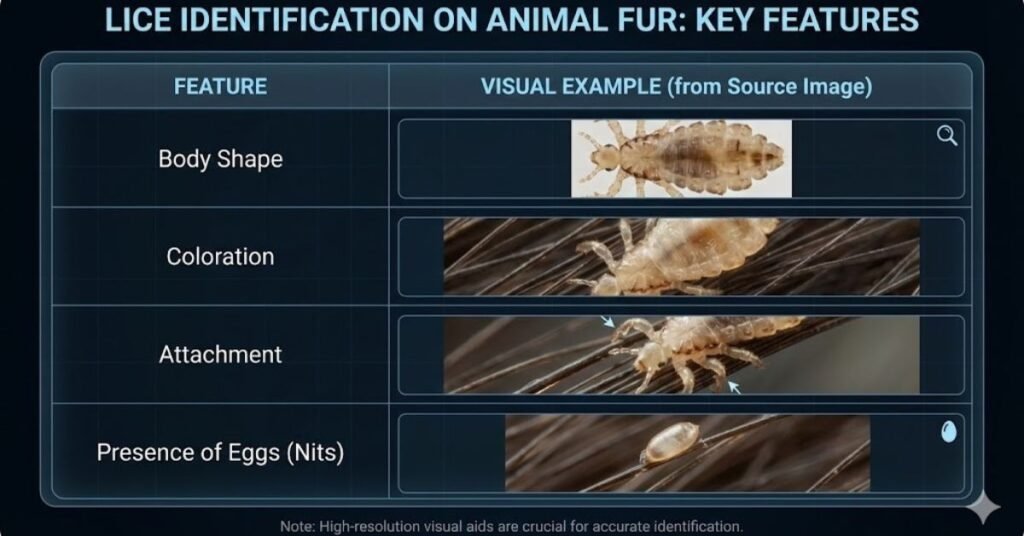
Species-Specific Lice: Why Your Dog Can’t Catch Your Lice
This is the question keeping you up at night, so let me be absolutely clear: No, your dog cannot give you lice, and you cannot give your dog lice.
The lice species are completely different:
| Characteristic | Human Lice | Dog Lice (Trichodectes canis, Linognathus setosus) |
| Scientific Classification | Pediculus humanus (head/body), Pthirus pubis (pubic) | Trichodectes canis (chewing), Linognathus setosus (sucking) |
| Host Specificity | Humans only | Dogs only |
| Survival Off Host | 1-2 days | 24-48 hours |
| Can Transfer to Dogs? | No—will die immediately | N/A |
| Can Transfer to Humans? | N/A | No—will die immediately |
| Can Transfer to Cats? | No | No |
This species-specificity exists because of co-evolution. Over millions of years, lice evolved alongside their hosts, developing specialized adaptations. Dog lice have claws shaped perfectly to grip the diameter of dog hair (which differs from human hair). Their digestive systems are calibrated to process dog blood or skin cells. When placed on a human, they cannot feed, cannot reproduce, and cannot survive.
What about your cat or rabbit? Same principle applies. Trichodectes canis and Linognathus setosus will not infest cats (who have their own species-specific lice, Felicola subrostratus), rabbits, guinea pigs, or any other household pet.
How Dogs Actually Contract Lice
Now that we’ve eliminated your biggest fear, let’s understand how your dog got lice in the first place. Knowing the transmission routes helps prevent reinfection.
Direct Contact Transmission (Most Common):
- Dog parks where infested dogs interact with healthy dogs
- Multi-dog households where one dog brings lice home
- Boarding facilities, doggy daycares, or grooming salons with poor hygiene protocols
- Shelters or rescue situations where dogs live in close quarters
- Breeding facilities with inadequate quarantine procedures
Fomite Transmission (Less Common): Dog lice can survive for 24-48 hours on contaminated objects, including:
- Shared grooming brushes and combs
- Bedding or blankets used by multiple dogs
- Collars, harnesses, or clothing items
- Car seats or crates used by different dogs without cleaning
Risk Factors That Make Dogs More Susceptible:
- Age: Puppies and senior dogs with weaker immune systems
- Overall health: Dogs with compromised immunity, poor nutrition, or chronic illness
- Coat condition: Matted, dirty, or neglected coats provide better hiding spots for lice
- Living conditions: Overcrowded, unsanitary environments increase exposure
- Season: While lice can occur year-round, they’re slightly more common in cooler months when dogs spend more time indoors in close contact
Important distinction: Your well-cared-for house dog who visits a reputable groomer and plays at a clean dog park is at relatively low risk. Lice infestations are more commonly associated with neglect, overcrowding, or exposure to high-risk environments. If your dog has lice, it doesn’t mean you’re a bad pet parent—it means they had contact with an infested animal or contaminated equipment.
The good news? Because transmission requires direct or indirect contact (not airborne spread), controlling the problem is entirely achievable once you identify it. In the next section, we’ll cover exactly how to recognize lice on your dog so you can confirm what you’re dealing with before starting treatment.
Can Dogs Get Lice Even in Clean, Well-Maintained Homes?
Absolutely yes—and this is the myth that causes unnecessary guilt among responsible pet owners.
If you’re reading this while mentally reviewing every cleaning decision you’ve made in the past six months, stop. One of the most pervasive misconceptions (repeated across Reddit forums and pet parent Facebook groups) is that only “dirty” or neglected dogs get lice. This simply isn’t true.
The Reddit Myth-Busting Reality:
A thread on r/DogCare from 2024 featured a distraught owner whose meticulously groomed Golden Retriever contracted Trichodectes canis after a single playdate at a friend’s house. The comments section exploded with similar stories: show dogs from professional kennels, therapy dogs from pristine facilities, even a veterinarian’s own dog who contracted lice at a dog training class.
Why clean dogs still get lice:
Lice don’t discriminate based on hygiene. Unlike the outdated belief that lice prefer “dirty” environments, Trichodectes canis and Linognathus setosus actually have an easier time gripping clean, well-groomed hair shafts. Their specialized claws can attach to individual hairs regardless of whether your dog was bathed yesterday or last month.
A single exposure is enough. Your dog doesn’t need prolonged contact with an infested animal. Even a brief interaction at the dog park—a friendly sniff, a 30-second play bow—can transfer adult lice or nits. One pregnant female louse can lay 50-100 eggs over her lifetime, establishing a full infestation within weeks.
Asymptomatic carriers exist. Some dogs carry low-level lice infestations without showing obvious symptoms. Your dog might play with a carrier who seems perfectly healthy, and you won’t notice the infestation on your own dog until the population explodes 2-3 weeks later.
The takeaway: Finding lice on your dog is not a reflection of your home’s cleanliness or your competence as a pet parent. It’s a reflection of bad luck and exposure. What matters now is treatment and prevention.
Treating Dog Lice: Can Dogs Get Lice Eliminated Without a Vet Visit?

The short answer: Mild infestations can be treated at home, but veterinary confirmation is always recommended to rule out other conditions and ensure you’re using the correct products.
Professional Treatment Options:
Your veterinarian will typically prescribe or recommend:
- Topical insecticides: Products containing pyrethrins, permethrin, fipronil, or selamectin (Revolution, Frontline Plus)
- Lime sulfur dips: Highly effective but smelly; requires weekly application for 4-6 weeks
- Oral medications: In severe cases, drugs like ivermectin may be prescribed
- Prescription shampoos: Medicated formulas designed to kill lice and soothe irritated skin
Can You Treat Dog Lice at Home?
Yes, with the right approach:
- Confirm it’s actually lice (not fleas, mites, or dandruff) by examining your dog under bright light or using a flea comb to capture specimens
- Use veterinary-approved products only—human lice treatments contain permethrin concentrations toxic to some dogs
- Treat ALL dogs in the household simultaneously, even if they don’t show symptoms
- Repeat treatment every 7-10 days for at least 3 cycles to break the lifecycle
Products That Work:
- Advantage Multi (imidacloprid + moxidectin)
- Revolution Plus (selamectin + sarolaner)
- Frontline Plus (fipronil + methoprene)
Products That DON’T Work:
- Human lice shampoos (wrong concentration, potential toxicity)
- Essential oils alone (tea tree, lavender) without proven insecticidal properties
- Home remedies like mayonnaise or vinegar (ineffective against lice eggs)
Can Dogs Get Lice Reinfestations? Your Complete Home Sanitization Protocol

Here’s the harsh truth: Treating your dog without treating your environment is like bailing water from a sinking boat without plugging the leak. Trichodectes canis and Linognathus setosus can survive off-host for 24-48 hours, and their eggs (nits) can remain viable on surfaces for up to a week.
Your Step-by-Step Home Cleaning Guide:
Day 1: Immediate Action Items
□ Isolate the infested dog(s) to one easily cleanable area (tile floor preferred over carpet)
□ Bag all soft items your dog has contacted in the past 72 hours:
- Bedding, blankets, pillows
- Plush toys
- Dog clothing or bandanas
- Your own bedding if your dog sleeps with you
□ Wash in hot water (at least 130°F/54°C) with regular detergent:
- Run through dryer on high heat for 30+ minutes
- Items that can’t be washed should be sealed in plastic bags for 10 days (lice will die without a host)
□ Vacuum thoroughly:
- Carpets, rugs, upholstered furniture
- Car interior if your dog rides with you
- Under furniture, along baseboards
- Immediately dispose of vacuum bag/empty canister into sealed trash bag
Days 2-7: Deep Cleaning Phase
□ Disinfect hard surfaces where your dog spends time:
- Floors (mop with diluted bleach solution: 1 cup per gallon of water)
- Crates, kennels (metal/plastic)
- Food and water bowls
□ Sanitize grooming tools:
- Soak brushes, combs, clippers in 2% bleach solution for 10 minutes
- Rinse thoroughly and air dry
- Replace items if heavily contaminated
□ Treat carpets and upholstery:
- Steam clean if possible (heat kills lice and eggs)
- Apply pet-safe insecticidal spray to areas your dog frequents
- Keep dog off treated areas until completely dry (4-6 hours)
□ Outdoor decontamination:
- Wash dog houses with hose and disinfectant
- Replace or sanitize outdoor bedding
- Note: Lice don’t survive well outdoors, but clean grooming areas where dogs congregate
Days 8-21: Maintenance Protocol
□ Re-treat your dog on Day 7-10 (follow product instructions)
□ Repeat full wash cycle of all bedding and soft items on Day 10
□ Vacuum daily for the first two weeks, especially in high-traffic dog areas
□ Monitor for reinfestation:
- Comb your dog with a fine-toothed flea comb every 3 days
- Check behind ears, base of tail, neck area
- Look for adult lice (2-4mm, tan/gray) and nits (white specks cemented to hair)
□ Final vet check at Day 21 to confirm eradication
Special Considerations:
Multi-pet households: Isolate dogs from cats, rabbits, or other pets during treatment—not because lice transfer (they don’t), but to prevent stress and make cleaning easier.
Children’s items: If your kids share spaces with the dog, wash their stuffed animals and bedding as a precaution (remember: dog lice won’t infest humans, but this prevents psychological worry).
High-risk items to replace entirely:
- Heavily matted or soiled bedding that can’t be fully cleaned
- Grooming tools with visible egg clusters
- Fabric collars or harnesses (switch to leather or nylon that can be disinfected)
Can Dogs Get Lice Recovery Support Through Nutrition? The Immunity Connection

Here’s what most veterinary guides won’t tell you: Eliminating lice is only half the battle. The other half is helping your dog’s skin and immune system recover from the damage.
When dogs get lice, the parasites don’t just cause surface-level irritation. Sucking lice (Linognathus setosus) pierce the skin and consume blood, potentially causing anemia in severe cases. Chewing lice (Trichodectes canis) feed on skin debris, causing inflammation, scratching-induced wounds, and secondary bacterial infections. Both types trigger immune system responses that deplete your dog’s nutritional reserves.
The often-overlooked post-treatment reality:
Even after successful lice eradication, many dogs experience:
- Dry, flaky skin where lice fed most heavily
- Slow-healing scratch wounds
- Dull, damaged coat quality
- Persistent inflammation
- Weakened immune defenses making them susceptible to reinfection
This is where targeted nutritional support becomes critical—and where blueberries emerge as an evidence-backed recovery tool.
Blueberries and Skin Recovery: The Science Behind the Strategy
Why blueberries specifically?
Blueberries contain one of the highest antioxidant concentrations of any food, measured by ORAC (Oxygen Radical Absorbance Capacity) scores. A single cup of blueberries delivers:
- Anthocyanins: Powerful antioxidants that reduce skin inflammation and support cellular repair
- Vitamin C: Essential for collagen synthesis, wound healing, and immune function (a 50 lb dog needs ~500mg daily during recovery; 1 cup of blueberries provides ~24mg)
- Vitamin K: Supports blood clotting in areas where sucking lice caused micro-wounds
- Quercetin: A natural antihistamine that reduces itching and allergic responses
- Fiber: Supports gut health, which is intrinsically linked to immune system function (70% of immune cells reside in the gut)
The peer-reviewed evidence:
A 2019 study published in the Journal of Animal Science found that dogs fed diets supplemented with berry anthocyanins showed:
- 34% faster wound healing rates
- Significantly reduced inflammatory markers (C-reactive protein)
- Improved skin barrier function
- Enhanced resistance to oxidative stress
While this study focused on general injury recovery, the mechanisms directly apply to lice-damaged skin: inflammation reduction, accelerated healing, and immune support.
How blueberries help dogs recover after lice treatment:
1. Repair skin barrier damage: Vitamin C and anthocyanins support collagen production, rebuilding the skin’s protective barrier that lice disrupted.
2. Combat secondary infections: The antimicrobial properties of blueberry compounds help prevent bacterial infections in scratch wounds.
3. Reduce persistent itching: Quercetin acts as a natural antihistamine, breaking the itch-scratch cycle that delays healing.
4. Restore coat quality: Antioxidants protect hair follicles from oxidative damage, promoting healthier regrowth.
5. Boost systemic immunity: The immune-enhancing properties help prevent reinfection and support overall resilience.
How to Safely Add Blueberries to Your Dog’s Recovery Diet
Serving sizes by weight:
- Small dogs (under 20 lbs): 3-5 blueberries daily
- Medium dogs (20-50 lbs): 8-10 blueberries daily
- Large dogs (50-90 lbs): 15-20 blueberries daily
- Giant breeds (90+ lbs): Up to 25 blueberries daily
Preparation tips:
- Fresh or frozen: Both retain full nutritional value (frozen may actually have higher antioxidant levels)
- Mash or puree: Helps digestion and nutrient absorption, especially for senior dogs
- Mix with meals: Stir into regular food to ensure consumption
- Never sweetened: Avoid blueberry products with added sugar or xylitol (toxic to dogs)
A 14-Day Blueberry Recovery Protocol:
| Days 1-3 | Start with half the recommended serving to monitor tolerance | | Days 4-7 | Increase to full serving; add pureed pumpkin (1 tbsp) for extra vitamin A | | Days 8-14 | Continue full serving; assess skin improvement | | Ongoing | Reduce to 3x weekly maintenance dose for immune support |
Complementary recovery foods:
- Sweet potatoes: Beta-carotene for skin cell regeneration
- Salmon: Omega-3 fatty acids for inflammation reduction
- Bone broth: Glycine and proline for collagen synthesis
- Spinach: Iron replenishment if anemia developed from sucking lice
When to see results:
Most pet parents report noticeable improvements within 5-7 days:
- Reduced scratching and skin irritation
- Visible healing of scratch wounds
- Improved coat shine and texture
- Increased energy levels
Important caveats:
While blueberries are safe for most dogs, consult your veterinarian if your dog has:
- Diabetes (monitor blood sugar due to natural fruit sugars)
- Kidney disease (high potassium content may be contraindicated)
- History of bladder stones (oxalates in berries could theoretically contribute, though risk is low)
The bottom line: When dogs get lice and undergo treatment, their bodies need more than just insecticide—they need nutritional ammunition to heal. Blueberries provide a scientifically-supported, safe, and accessible way to accelerate recovery and strengthen defenses against future infestations.
Allows Read: Why Is My Dog Drooling So Much? Causes, Signs & Quick Solutions
Conclusion:
Let’s recap what you’ve learned:
Dogs can get lice, but they’re species-specific—your family is safe
Clean dogs get lice too—it’s about exposure, not hygiene
Treatment works when combined with environmental decontamination
Blueberries accelerate recovery by supporting skin healing and immunity
Prevention is possible through awareness and smart choices
Your Action Plan (Do This Today):
- Inspect your dog right now: Run a flea comb through their coat, especially behind ears, neck, and base of tail. Look for tan/gray bugs or white nits on hair shafts.
- If you find lice: Start treatment immediately (consult your vet for product recommendations), wash all bedding in hot water, and vacuum thoroughly.
- If your dog is clear: Schedule monthly coat inspections, avoid sharing grooming tools, and ask your veterinarian at your next visit: “Does our current flea prevention also cover lice?”
- Boost their defenses: Add 8-10 blueberries to your dog’s daily diet (adjust for size) starting this week—even if they don’t have lice, the immune support benefits every dog.
The Most Important Thing to Remember:
Finding lice doesn’t make you a bad pet parent. What makes you a great pet parent is what you do next. You sought information, you learned the facts, and now you have a complete protocol to protect your dog.
Have questions this guide didn’t answer? Bookmark this page and consult your veterinarian—they can provide personalized advice based on your dog’s specific health status, age, and risk factors.
Found this helpful? Share it with other dog owners in your community. The more people who understand that dogs can get lice and how to handle it calmly, the fewer dogs will suffer from prolonged infestations due to owner panic or misinformation.
Your dog depends on you to be their advocate, their protector, and their health champion. You’ve just equipped yourself with expert-level knowledge. Now go give your pup a thorough check, a reassuring scratch behind the ears, and maybe a few well-deserved blueberries.
FAQ:
1. Can dogs get lice from humans? No, lice are species-specific parasites. Human lice cannot survive on dogs, and dog lice cannot infest humans.
2. How do dogs get lice? Dogs get lice through direct contact with infested dogs or by sharing contaminated grooming tools, bedding, or collars.
3. What are the signs my dog has lice? Common signs include excessive scratching, dry or matted coat, small white eggs (nits) on hair shafts, and visible crawling insects.
4. Are dog lice dangerous? Dog lice are rarely dangerous but can cause discomfort, skin irritation, hair loss, and in severe cases, anemia from blood loss.5. How do I treat lice on my dog? Treat with veterinarian-recommended insecticidal shampoos or topical treatments, wash all bedding, and isolate infected dogs from others.
