

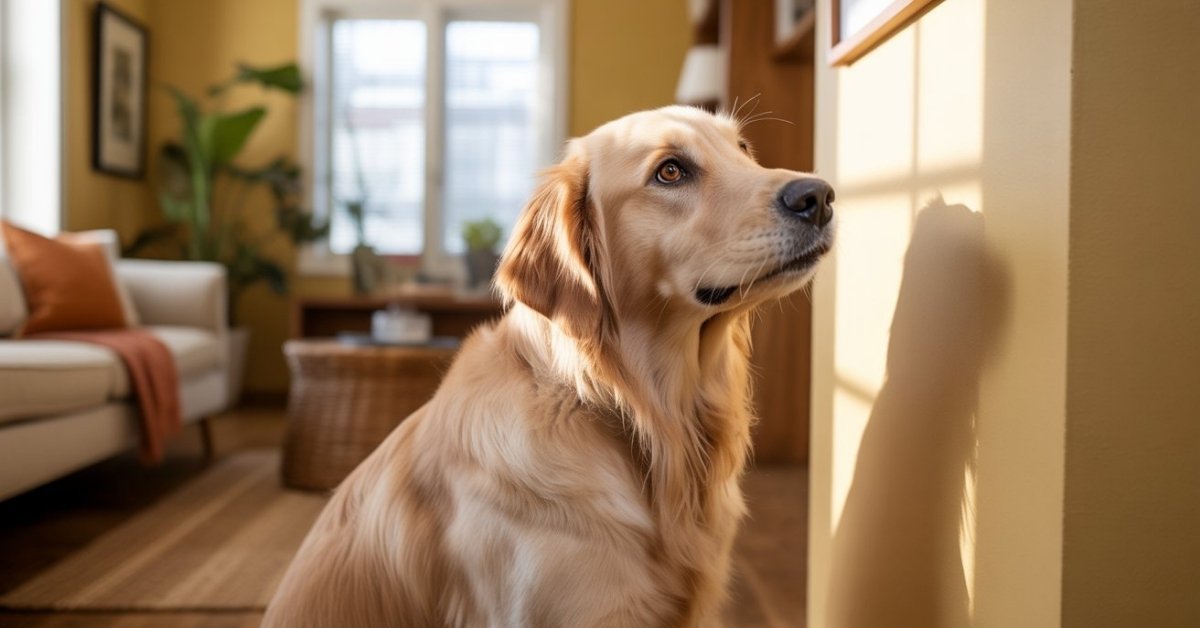
Dogs sometimes stare at walls for no clear reason. This behavior means your dog is standing or sitting still and looking at a wall for a long time. It may happen once in a while or become a habit. In many cases, it is harmless. But sometimes, it can point to a deeper issue.
Seeing your dog do this can feel strange or even scary. You may wonder if your dog is bored, confused, or sensing something you cannot see. The truth is, wall staring can have simple causes. It can also be an early warning sign you should not ignore.
In this guide, you will learn the most common reasons dogs stare at walls. Some reasons are linked to behavior and age. Others may involve health problems. You will also learn when it is safe to relax and when it is time to call a vet.
Is My Dog Staring at a Ghost or Something in the Wall?
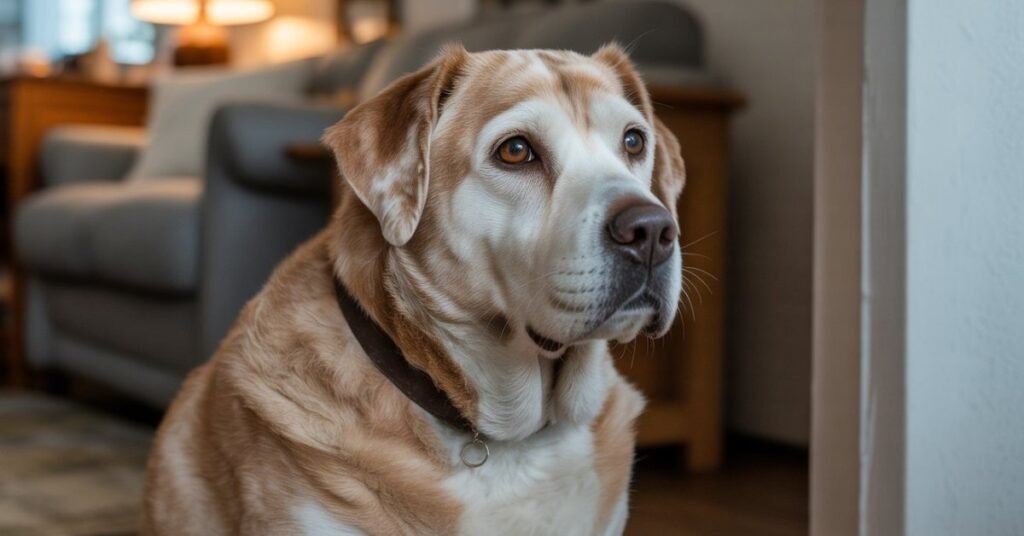
Many owners joke that dogs can see ghosts. In reality, dogs do not see spirits. But they do notice things humans completely miss. When your dog stares at a wall, it often means something caught their attention inside or behind it. The cause is usually physical, not paranormal.
Dogs rely on sharp senses more than sight alone. Sounds, smells, and tiny movements can trigger intense focus. What looks like empty space to you may feel very “busy” to your dog. That is why this behavior can seem sudden or random.
Sensory Superiority: Hearing and Smelling What We Can’t
Dogs hear higher frequencies and smell far better than humans. They may detect noises or scents coming from inside walls. Even faint vibrations can grab their attention. Your dog is not imagining things. They are reacting to real sensory input.
Common triggers include:
- Water pipes making subtle sounds
- Electrical buzzing inside walls
- Outdoor animals moving nearby
- New or unusual smells trapped in the wall
Investigating Pests: Mice, Termites, and Wall-Dwellers
Sometimes, the wall itself is the problem. Small pests often live inside walls and move quietly. Dogs can hear scratching, crawling, or tapping sounds long before humans notice anything. This makes your dog stare, sniff, or even paw at one spot.
Wall-staring linked to pests may include:
- Focus on the same wall area daily
- Head tilting or ear twitching
- Sniffing or pacing near the wall
- Increased alertness at night
If this behavior continues, it may be worth checking your home for pests.
When Staring Signals a Medical Concern: Understanding Canine Cognitive Dysfunction (CDS)
Sometimes, wall staring is not about sounds or smells. It can be a sign of a medical issue, especially in older dogs. One common cause is Canine Cognitive Dysfunction, also called CDS. This condition affects the brain and is similar to dementia in humans. Dogs with CDS may seem confused or lost.
Wall staring happens because the brain is not processing information correctly. Your dog may pause, freeze, or stare at nothing for minutes. This behavior often appears slowly and gets worse over time. Early signs are easy to miss, so awareness matters.
What Is Doggy Dementia?
Doggy dementia is age-related brain decline. It usually affects senior dogs. Memory, awareness, and learned habits begin to fade. Your dog is not being stubborn or lazy. Their brain is simply changing.
Common Symptoms of CDS in Senior Dogs
Dogs with CDS often show more than one symptom. Wall staring is just one possible sign.
Common symptoms include:
- Staring at walls or into space
- Getting stuck in corners or behind furniture
- Confusion in familiar rooms
- Changes in sleep patterns
- Less interest in play or people
How to Support and Manage a Dog with CDS
CDS cannot be cured, but it can be managed. A calm routine helps your dog feel safe. Mental stimulation can slow decline. Veterinary support is very important.
Helpful steps include:
- Keeping daily routines consistent
- Using brain games and gentle exercise
- Adding vet-approved supplements
- Scheduling regular vet checkups
Early support can improve your dog’s quality of life and reduce stress for both of you.
Neurological Reasons for a Dog Staring at the Wall
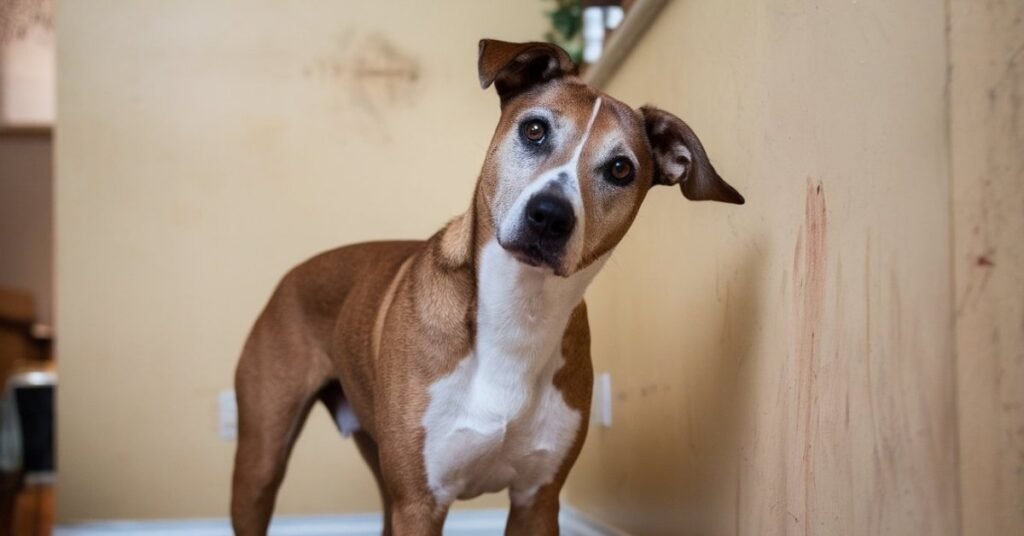
In some cases, wall staring is linked to the nervous system. The brain, spinal cord, and eyes all work together. When something goes wrong, your dog’s behavior can change. Staring at a wall may be one of the first visible signs.
These issues are more serious than boredom or curiosity. They often come with other symptoms. If wall staring appears suddenly or happens often, medical attention is important. Early diagnosis can make a big difference.
Focal Seizures: The “Zoning Out” Phenomenon
Focal seizures affect only part of the brain. During these episodes, dogs may freeze and stare at one spot. They might seem awake but unresponsive. These moments can last seconds or minutes.
Signs linked to focal seizures include:
- Sudden staring into space or at walls
- Lip licking or jaw snapping
- Twitching of the face or ears
- Not responding to their name
Brain Tumors and Spinal Cord Issues
Brain tumors can press on areas that control behavior and vision. Spinal cord problems may also affect awareness and posture. Wall staring may happen because your dog feels disoriented or uncomfortable.
Possible warning signs include:
- Loss of balance or coordination
- Head pressing against walls
- Changes in personality
- Weakness in legs
Vision Loss: Navigating the World Through Staring
Dogs with vision loss may stare at walls as they try to understand their space. They rely more on memory and light patterns. This can look strange, but it is a coping behavior.
Vision-related signs may include:
- Bumping into furniture
- Hesitation in low light
- Startling easily
- Staying close to walls or corners
A vet visit is essential if you notice these signs together with wall staring.
10 Common Reasons for Your Dog’s Unusual Behavior
Dogs stare at walls for many different reasons. Some are harmless and short-term. Others need attention. Breaking these reasons into groups makes them easier to understand. This listicle format helps you spot patterns and decide what to do next.
Not every reason means danger. Age, environment, and mood all matter. Use this list as a guide, not a diagnosis. If behaviors repeat or worsen, a vet visit is always the safest step.
#1 to #3: Sensory & Attention Seeking
These reasons are the most common. They are often linked to your dog’s sharp senses or need for interaction.
- #1 Hearing or smelling something inside the wall
- #2 Watching shadows, light, or reflections
- #3 Seeking attention or reacting to boredom
#4 to #6: Neurological & Brain Health
These causes are more serious. They often appear in senior dogs or show sudden changes.
- #4 Canine Cognitive Dysfunction (doggy dementia)
- #5 Focal seizures or brief brain episodes
- #6 Brain pressure, tumors, or nerve issues
#7 to #10: Behavioral, Anxiety, and Mood Changes
Mental health also affects behavior. Stress can cause repetitive actions like wall staring.
- #7 Anxiety or fear response
- #8 Stress from changes in routine or home
- #9 Vision loss or confusion in low light
- #10 Habit or learned behavior over time
Understanding the category helps you decide whether to observe or act quickly.
Working With Your Vet: How to Help Them Diagnose the Issue

Your vet needs clear and simple information to find the cause. Wall staring can have many reasons. The more details you provide, the easier the diagnosis becomes. Even small changes in behavior can matter.
Start observing your dog at home. Take notes for a few days. This helps your vet see patterns instead of guesses.
Helpful things to share with your vet:
- When the wall staring started
- How often and how long it lasts
- Your dog’s age and breed
- Any recent changes in routine or home
- Other symptoms like pacing, whining, or confusion
If possible, record a short video. It gives your vet a clear view of what is happening. Early and accurate information leads to better care and faster relief for your dog.
FAQs
1. Is it normal for dogs to stare at walls?
Yes, it can be normal at times. Dogs may react to sounds, smells, or light you cannot notice.
2. When should I worry about my dog staring at the wall?
Worry if it happens often, lasts long, or comes with confusion, pacing, or behavior changes.
3. Can wall staring be a sign of illness?
Yes. It can be linked to brain issues, seizures, vision loss, or doggy dementia, especially in older dogs.
4. Do dogs stare at walls because of anxiety or stress?
Yes. Anxiety, boredom, or routine changes can cause repetitive behaviors like wall staring.
5. Should I take my dog to the vet for wall staring?
If the behavior is new, frequent, or worsening, a vet visit is the safest choice.
CONCLUSION
Wall staring in dogs can mean many things. Sometimes it is harmless and linked to senses or boredom. Other times, it can signal stress, aging, or health problems. Watching patterns and small changes helps you understand what your dog needs.
Trust your instincts as an owner. If the behavior feels unusual or keeps happening, do not ignore it. Early action can prevent bigger problems. With attention, care, and vet support, you can keep your dog safe and comfortable.
