

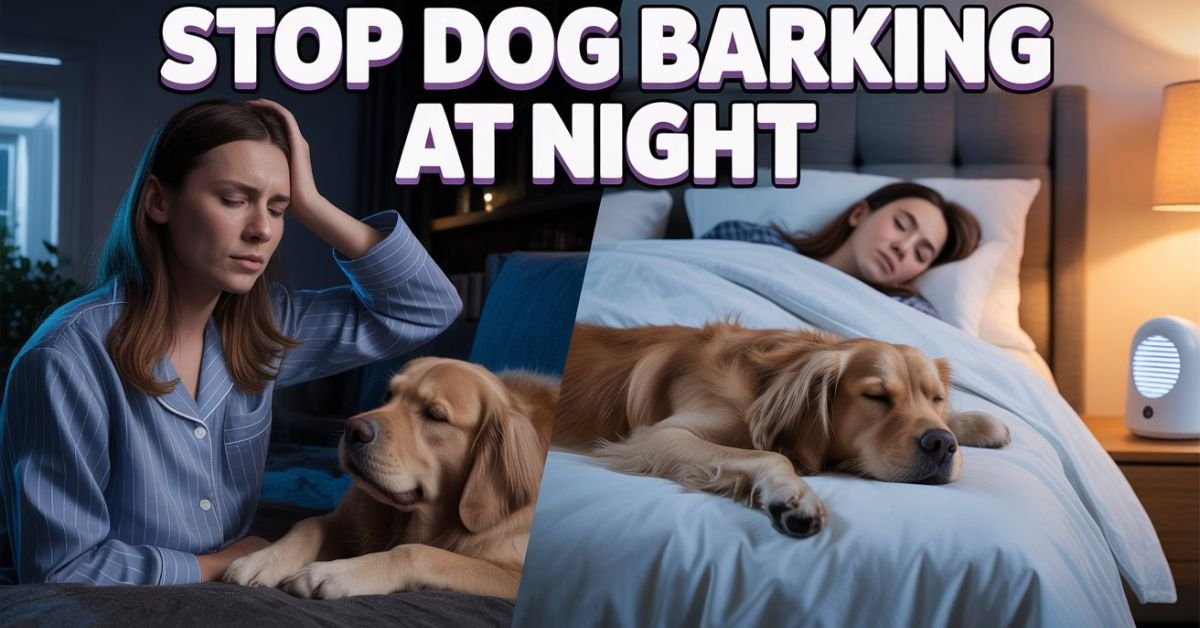
If you are a pet owner, there is nothing more frustrating than being woken up in the middle of the night by a loud bark. Not only does it ruin your sleep, but it can also lead to complaints from neighbors. Learning how to stop dog barking at night is essential for a peaceful home environment and your dog’s overall well-being.
In this guide, we will provide direct, expert-backed solutions to help you identify the cause of the noise and implement strategies to ensure a quiet night for everyone.
Quick Fixes: Immediate Solutions for Tonight
If your dog is barking right now and you need immediate silence, try these direct steps:
- Mask the Noise: Use a white noise machine or a loud fan to drown out external triggers like passing cars or roaming animals.
- The “Check-In” Method: Quickly check if your dog needs a bathroom break or water. If they are fine, avoid giving them too much attention, as this can reinforce the barking.
- Soothing Scents: Use lavender or dog-appeasing pheromone (DAP) diffusers near their sleeping area to promote relaxation.
The Root Causes: Why Do Dogs Bark at Night?
To effectively stop dog barking at night, you must first understand the “Why.” According to animal behavior experts (E-E-A-T principles), dogs usually bark for these reasons:
- Alert Barking: They hear something outside and want to protect their territory.
- Boredom: They haven’t had enough physical or mental stimulation during the day.
- Separation Anxiety: They feel distressed when isolated from their owners.
- Medical Issues: Older dogs may suffer from Cognitive Dysfunction or pain that worsens at night.
Quick Comparison: Barking Types & Solutions
| Barking Type | Sound / Pattern | Primary Trigger | The “Pro” Solution |
| Alert Barking | Sharp, loud, rapid bursts. | Noises (Cars, wind, neighbors). | Use white noise machines and blackout curtains. |
| Attention Seeking | High-pitched, intermittent, eye contact. | Boredom or wanting treats/pets. | Strict “Ignore” policy (No eye contact until quiet). |
| Separation Anxiety | Whining, howling, pacing. | Being left alone in a different room. | Gradual desensitization and “calm-down” treats. |
| Boredom Barking | Monotone, repetitive “woof… woof”. | Lack of physical/mental exercise. | Increase evening fetch or use snuffle mats. |
| Medical/Senior | Disoriented barking, often at nothing. | Pain or Cognitive Dysfunction (CCD). | Immediate vet checkup and joint supplements. |
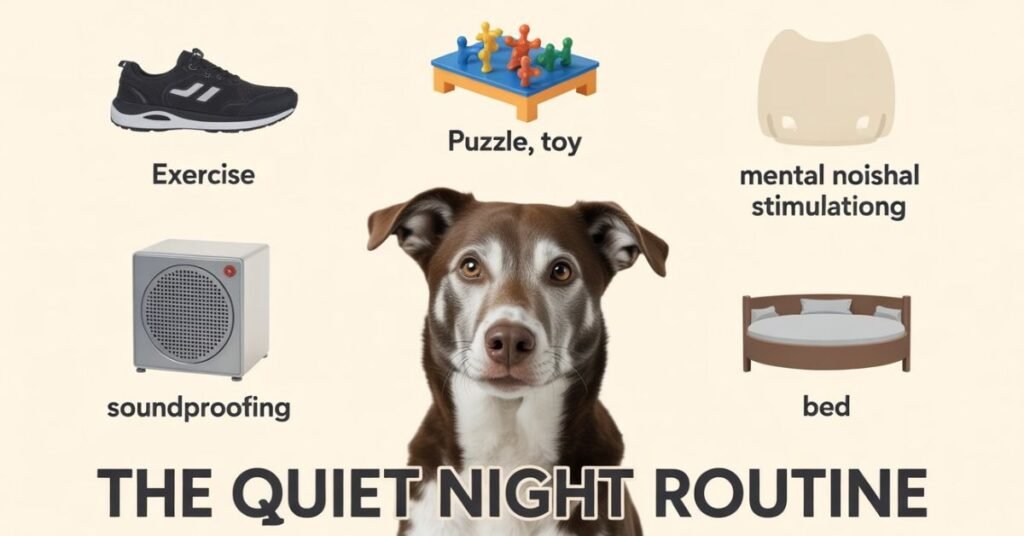
Step-by-Step “Quiet Night” Routine
Building a routine is the most effective way to manage this behavior long-term.
- Intense Evening Exercise: A tired dog is a quiet dog. Ensure a 30-minute play session before dinner.
- Mental Puzzles: Use “Snuffle mats” or treat-dispensing toys in the evening to tire their brain.
- Optimized Sleeping Space: Ensure their bed is away from windows where they might see shadows or hear street noises.

How to Stop Dog Barking at Night in Small Apartments
Living in a high-density building adds extra pressure to stop dog barking at night because sound travels through shared walls. If you are struggling with a vocal pet in a studio or apartment, these specific hacks are for you:
- The “Buffer Zone” Setup: Never place your dog’s crate or bed directly against a shared wall. Even a few inches of gap, filled with a sound-absorbing acoustic foam or a heavy bookshelf, can reduce the decibels reaching your neighbor’s bedroom.
- Window Management: Apartment dogs often bark at “hallway shadows” visible under the door or street lights. Use draft stoppers at the bottom of your front door to block both light and scent triggers.
- Strategic Pheromone Placement: In small spaces, plug-in diffusers like Adaptil are highly effective. Place them exactly where your dog sleeps 30 minutes before bedtime to create a “zen zone.”
- Floor Dampening: If your dog paces and barks, the sound of nails on hardwood can annoy downstairs neighbors. Use thick area rugs with rubber padding to muffle the sound of movement, which often de-escalates the dog’s own arousal levels.
Effective Training Techniques to Stop Dog Barking at Night
Training requires patience, but it is the only way to achieve lasting results. Here are the most effective methods:
- The “Quiet” Command: Practice this during the day. When your dog barks, wait for a second of silence, say “Quiet,” and immediately give a treat. Eventually, they will associate the word with stopping the noise.
- Desensitization: If your dog barks at specific sounds (like the wind or a neighbor’s door), play recordings of those sounds at a very low volume during the day. Give treats while the sound plays. Gradually increase the volume as your dog learns to stay calm.
- Reward-Based Crate Training: If your dog sleeps in a crate, make it their favorite place. Feed them meals inside and provide a special “night-only” chew toy. A comfortable crate reduces the urge to stop dog barking at night by making them feel secure.
Managing the Neighborhood: A Proactive Approach
While you are working on training, your neighbors might still be affected.
- Communication is Key: Let your neighbors know you are actively training your dog. A small note or a quick chat can prevent legal complaints and build empathy.
- Soundproofing Hacks: Place heavy curtains over windows or move your dog’s crate to a room that doesn’t share a wall with the neighbors.
Frequently Asked Questions (FAQs)
Q: Should I ignore my dog’s barking at night? A: If the barking is for attention, ignoring it can work (though it gets worse before it gets better). However, if it’s due to fear or a medical issue, ignoring it will only increase your dog’s stress.
Q: Can I use a bark collar? A: Experts recommend positive reinforcement over punishment. Bark collars can often increase anxiety, making the root cause of the barking worse in the long run.
Q: How long does it take to stop the barking? A: With a consistent routine, most owners see a significant improvement within 2 to 3 weeks.
Conclusion
To stop dog barking at night, you need a combination of physical exercise, mental stimulation, and a calm sleeping environment. By following the “Quiet Night” routine and addressing the root cause whether it’s anxiety or alert barking you can restore peace to your home. Remember, if the behavior persists, consulting a professional trainer or vet is always a wise step to ensure your pet’s health and happiness.
